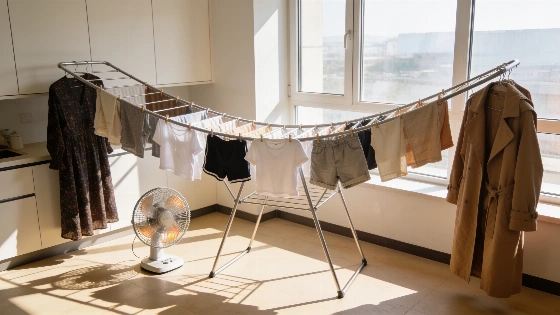
A Japanese method for hanging laundry—placing long garments at the ends and shorter ones in the center—can reduce drying time by up to half an hour. This approach improves air circulation, helping clothes dry faster and minimizing musty odors, especially in small or poorly ventilated homes.
Hanging laundry indoors during rainy months often means slow drying and lingering damp smells, especially in compact apartments with limited airflow. Yet a straightforward Japanese technique, known as the “hanging rainbow” or “arc drying,” is gaining attention for its ability to speed up the process without any special equipment.
The method is simple: arrange your longest garments, such as dresses or trousers, at the outer edges of the drying rack, and place shorter items like shirts or T-shirts toward the center. This creates an inverted U-shape along the bottom edge of the laundry. According to recommendations from Tokyo-based housing portal Apts, this setup allows air to circulate more freely around each item, preventing overcrowding and promoting faster evaporation.
Spacing is crucial. Panasonic suggests leaving at least a three-finger gap between garments, or a fist-width if space allows. The rack itself should be positioned away from walls and curtains to avoid stagnant air. In controlled tests cited by Lion, a leading Japanese manufacturer, laundry arranged in an arc dried in four hours at 25°C and 65% humidity—about 30 minutes faster than other common layouts, such as a V-shape or alternating pattern.
The science behind the improvement lies in airflow. With longer items on the ends, more air reaches the thickest fabrics, while the open center encourages a downward current beneath the rack. Lion’s fluid dynamics analysis found that this configuration accelerates the movement of moist air away from the clothes, further reducing drying time. For best results, place heavy cottons and large towels on the sides, and keep lighter synthetics or thin fabrics in the middle.
Preventing Musty Odors
To avoid the telltale smell of damp laundry, remove clothes from the washing machine as soon as the cycle ends. Letting them sit in the drum encourages the growth of odor-causing microbes. Both Apts and Panasonic emphasize immediate hanging and proper spacing as key to freshness. Lion’s research indicates that musty odors can begin to develop after about five hours of slow drying, though this varies with temperature and humidity. Reducing the size of each load and separating garments helps ensure everything dries before odors set in.
Special Tips for Towels and Heavy Items
Certain items benefit from tailored hanging techniques. Towels dry faster if one end hangs lower than the other, minimizing overlapping fabric. Alternatively, drape them diagonally or stretch them between two bars to maximize airflow on both sides. For jeans and thick trousers, turn them inside out and open the waistband to form a tube. Hooded sweatshirts should be hung so the hood is separated from the back. Socks and underwear can be clipped to a peg rack, with space between each piece.
Boosting Drying on Humid Days
On especially humid days, a fan directed at the lower part of the rack can further accelerate drying—no tumble dryer required. This approach is particularly useful in homes where space and ventilation are limited.
While the “hanging rainbow” method is rooted in Japanese domestic routines, its practical benefits are relevant anywhere indoor drying is a challenge. As home design trends increasingly prioritize efficiency and comfort, even small adjustments—like those seen in the rise of walk-in showers, as discussed in recent coverage of bathroom innovations—can make a noticeable difference in daily life.
Ultimately, the arc drying technique offers a low-cost, effective way to keep laundry fresh and speed up drying, especially when the weather or living conditions make outdoor drying impossible.