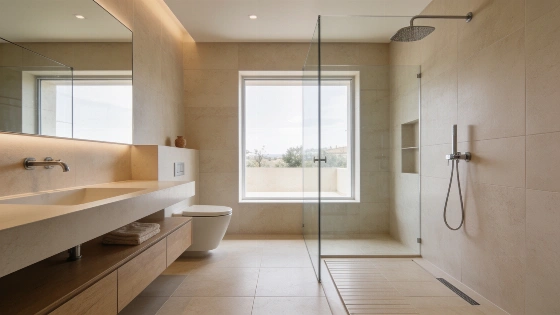
Walk-in showers, known for their floor-level entry and minimalist look, are becoming the preferred choice in bathroom renovations. Their rise is driven by improved accessibility, easier cleaning, and a modern aesthetic, though installation demands greater precision and a higher budget.
In many Spanish homes, the classic raised shower tray is quietly losing ground. By 2026, the walk-in or Italian-style shower—distinguished by its flush, step-free entry—has become a defining feature in both new builds and major bathroom renovations. This shift is not just about aesthetics: the walk-in shower offers a continuous floor surface, making the space feel larger and more open while removing physical barriers that can hinder access.
The core difference lies in the construction. Instead of a raised tray, the shower area is integrated directly into the bathroom floor, with a subtle slope guiding water toward a discreet drain or linear channel. This approach allows for a seamless look, often using the same tile throughout the room, or a contrasting material to subtly define the wet zone. The result is a bathroom that feels brighter, more spacious, and easier to navigate—especially for those with limited mobility.
Accessibility and Safety
One of the main advantages of the walk-in shower is its accessibility. The absence of a step reduces the risk of tripping and makes entry easier for older adults or anyone with mobility challenges. The open design also allows for the installation of grab bars, fold-down seats, and wider access points without interrupting the visual flow of the floor. For many, these features are not just about comfort, but about future-proofing the home for changing needs.
Cleaning and Maintenance
Cleaning is another area where the walk-in shower stands out. By eliminating sliding doors, bulky frames, and many of the joints found in traditional enclosures, there are fewer places for limescale, soap, and moisture to accumulate. Even when a fixed glass panel is used to contain splashes, the overall maintenance is simpler, with fewer metal fittings and less risk of mold or grime buildup.
The choice of materials is crucial. Porcelain tiles, microcement, and treated stone are popular for their durability and slip resistance, essential qualities in a wet environment. Using the same flooring throughout the bathroom enhances the sense of space and light, a key reason for the growing popularity of this design.
Installation Challenges
However, the transition to a walk-in shower is not without its challenges. Installation requires careful planning and skilled workmanship. The floor must be precisely sloped to ensure proper drainage, and the waterproofing must be flawless to prevent leaks and damp issues. There also needs to be enough space beneath the floor to accommodate the drain and trap, which can be a limiting factor in some apartments or older buildings.
Open showers can also mean that water spreads beyond the immediate area under the showerhead. This makes the placement of drains, fixtures, and protective glass panels critical to avoid unwanted splashes and ensure the bathroom remains functional and dry.
Cost and Space Considerations
Switching to a walk-in shower typically involves a higher upfront investment. The need to modify the floor, install advanced drainage, and apply specialized waterproofing all add to the cost. The budget can rise further if plumbing needs to be rerouted or if the renovation is part of a larger overhaul.
Despite these requirements, a large bathroom is not essential. According to Hansgrohe, a minimum area of 90 by 90 centimeters is recommended, though more generous dimensions improve comfort. In smaller spaces, a single fixed glass panel can help contain water while preserving the open feel that defines the walk-in style.
For those seeking a quick, budget-friendly update, the traditional shower tray remains a practical option. Yet the walk-in shower continues to gain traction for its accessibility, visual continuity, and adaptability to different layouts. As with any renovation, the final result depends on careful planning and expert execution.
As noted by Talent24h, the walk-in shower's rise reflects broader trends in Spanish home design, where functionality, safety, and modern aesthetics increasingly shape renovation choices. For homeowners considering a bathroom update, understanding the technical demands and benefits of this approach is key to making an informed decision.