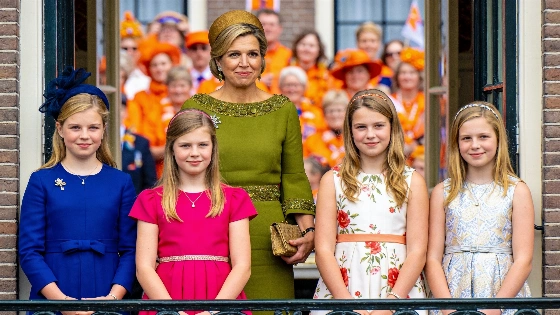
For the first time since starting university, Amalia, Alexia, and Ariane of the Netherlands appeared together at Prinsjesdag. The royal sisters joined King Willem-Alexander and Queen Máxima for the ceremonial opening of the Dutch parliamentary year.
Amalia, Alexia, and Ariane of the Netherlands appeared together in public at Prinsjesdag 2026, after months spent living in different cities as students. They joined King Willem-Alexander and Queen Máxima for the Throne Speech, a moment that brought the royal family together at a time when the House of Orange is looking ahead to its next chapter.
The procession through The Hague drew crowds dressed in orange, but the focus was on the three princesses. Amalia, the heir, rode with her parents in the glass carriage. Alexia and Ariane traveled with their uncle Prince Constantijn and Princess Laurentien in the Gala Glass Berline. The carriages, pulled by Gelderland and Friesian horses, moved through the city center with military bands and royal guards lining the route. The event was a reminder of the monarchy’s presence, even as the younger royals follow their own paths.
"For the first time in recent years, all three daughters of the royal couple—Amalia, Alexia, and Ariane—appeared together at Prinsjesdag, marking a significant protocol milestone."
—Blauw Bloed
Inside the Royal Theatre, King Willem-Alexander delivered the Throne Speech, outlining the government’s plans for the coming year. He spoke directly about the need to protect democracy, the struggles of farming families, and the severe housing shortage: “Democracy needs constant protection and maintenance. It is a mindset that must live in each of us. The majority of farming families feel pain and uncertainty. That is why the Cabinet is allocating substantial funds to support them.” On housing, he said, “The shortage of housing is severe.” The speech, written by the government, is a tradition dating back to 1814 and is a key moment for the monarchy to show its role above politics. According to the official government website, the 2026 speech focused on democracy, support for farmers, and the housing crisis, with the king acting as the cabinet’s messenger.
Fashion drew its own attention. Queen Máxima chose a simple white blouse and flared skirt, a quieter look than her usual Prinsjesdag style. Ariane wore a burgundy Han Taminiau gown that her mother had worn to the same event in 2019, a subtle nod to family tradition. Amalia and Alexia wore green, while Ariane stood out in burgundy. Outlets like HELLO! and GALA noted how the color choices balanced tradition with individuality.
Each princess is now following her own path. Amalia started a law degree at the University of Amsterdam in 2025 and continues her military training. Alexia studies civil engineering at University College London. Ariane is at Delft University of Technology, studying aerospace engineering. Their choices reflect a move away from the insular world of royalty. Ariane’s presence at Prinsjesdag is new, now that she is an adult, as several royal correspondents have confirmed.
"In 2026, Prinsjesdag coincided with the United Nations International Day of Democracy, a fact the Dutch government highlighted to add symbolic weight to the king's speech about safeguarding democratic values."
—rijksoverheid.nl
After the ceremony, the royal family returned to Noordeinde Palace for the traditional balcony appearance, while the Minister of Finance presented the 2027 budget to parliament. The day’s events—public procession, political ritual, and family gathering—were carefully planned to show the Dutch public that the monarchy remains relevant, even as its younger members step into adulthood. The format stayed traditional, with carriages, military escort, and the Royal Theatre as the main stage, as confirmed by several independent reports.
The Dutch monarchy continues to adapt its image without losing its core role. By bringing Amalia, Alexia, and Ariane together at a national event, the House of Orange signals both stability and change. The message is clear: the royal family is preparing for the future by supporting the independence and ambitions of its next generation. In a Europe where the role of royalty is often debated, this reunion is less about nostalgia and more about showing that the monarchy is willing to evolve.