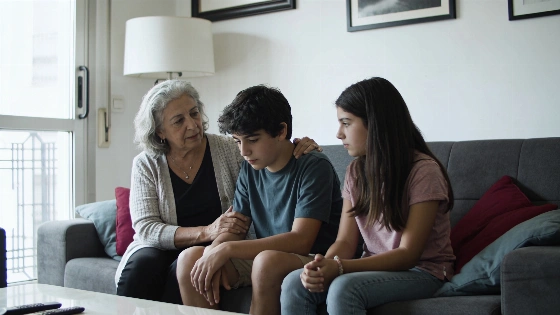
Two years after Caritina Goyanes' passing, her family stays close, supporting her children and each other. The loss reshaped their daily lives, but their bond has only grown stronger.
On August 26, 2024, the sudden death of Caritina Goyanes marked a turning point for her family. Since then, her relatives have focused on maintaining unity and supporting her two children, Pedro, now 16, and MiniCari, 13. The family, already close before the tragedy, has become even more tightly knit, drawing strength from shared memories and daily routines that keep Caritina's presence alive in their lives.
Caritina's mother, Cari Lapique, faced a double loss in a short span, losing her husband Carlos Goyanes just weeks before her daughter. Despite the emotional toll, she has found comfort in her grandchildren, especially in her relationship with MiniCari. The two have developed a strong connection, often spending time together at the cinema or enjoying lighthearted activities at home. This companionship has become a vital source of support for Lapique, helping her navigate the ongoing grief.
Carla Goyanes, Caritina's sister, celebrated her 43rd birthday surrounded by family, highlighting the importance of togetherness. She has taken on a central role in caring for her mother and her late sister's children, fulfilling a promise made to Caritina. Carla's commitment extends to her own family, with her husband Jorge Benguría and their three children, as she balances responsibilities and ensures that both her mother and her nephews feel supported. She describes Pedro as disciplined and responsible, while MiniCari is seen as unique and quick-witted.
Antonio Matos, Caritina's widower, has focused on raising their children and managing Sixsens by Cari, the catering business that was Caritina's dream project. Six months after her passing, Matos shared his struggle to adapt, expressing how deeply her absence is felt. He referenced lyrics from Tini Stoessel's song 'Pa' to convey the sense of loss and the challenge of moving forward while honoring Caritina's legacy.
Throughout these two years, the family has relied on mutual support and the values Caritina embodied—generosity, optimism, and resilience. Their efforts to maintain stability and care for the younger generation reflect a determination to uphold her memory. The family's experience echoes the challenges faced by others coping with sudden loss, as seen in other Spanish families affected by tragedy, such as the incident in Roda de Berà where a mother and daughter lost their lives during a storm, detailed in this report on a fatal accident in Tarragona.
In Spain, family ties often play a crucial role in overcoming personal loss. The Goyanes family's approach—prioritizing togetherness, open communication, and shared responsibility—illustrates how Spanish households adapt to adversity. Support networks, both within families and through close friends, are commonly relied upon to help children and elderly relatives adjust after bereavement. The ongoing commitment to Caritina's children and the preservation of her memory highlight the enduring importance of family solidarity in Spanish culture.