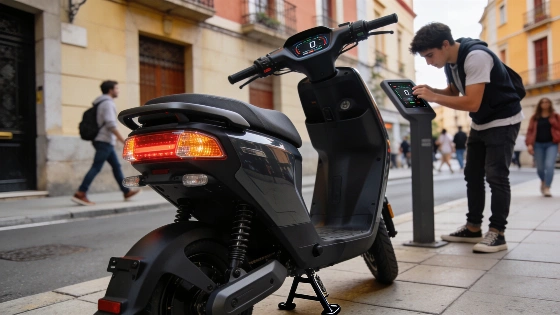
Starting January 2027, electric scooters and other personal mobility vehicles without official certification will be banned from public roads in Spain. The DGT’s new rules set strict technical standards and require a certificate for every new sale.
Electric scooters without official certification are on their way out in Spain. The Dirección General de Tráfico (DGT) has set a firm deadline: from January 22, 2027, only certified personal mobility vehicles (VMPs) can legally use public roads. This is a major change for both riders and manufacturers.
The clock started ticking on January 21, 2024, when the DGT’s new rules kicked in. From that day, every VMP sold in Spain—especially electric scooters—must have a certificate of approval. Scooters bought before that date get a three-year grace period. But after January 2027, they will no longer be allowed on the road. The rule is clear: uncertified vehicles will be banned, no matter how old or well-kept they are.
According to OCU, as of September 2026, only about 140,000 out of more than 4 million electric scooters in Spain had been registered, highlighting the market's low readiness for the new requirements.
Why is the DGT taking such a hard line? Safety and order are at the heart of the move. The certificate is not just paperwork. It proves that each vehicle meets minimum standards for quality, durability, and technical reliability. Without it, a scooter or similar device is not considered safe or legal under Spanish law. The consumer group OCU says these rules are meant to make sure only vehicles that meet strict technical and safety standards stay on the road after the transition period.
For buyers, this means the days of grabbing any cheap scooter online or in a shop are over. The DGT now keeps an official list of approved brands and models on its website. Only vehicles on this list will meet the new rules and stay street-legal after 2027. OCU points out that, starting in 2026, legal use of a VMP will also require registration in the DGT registry, a visible ID sticker, and valid insurance. Older models get a grace period until January 2027.
The technical requirements are strict. Certified VMPs cannot go faster than 25 km/h, and their motors must cut off at that speed. Anti-tampering systems are required to stop illegal changes to speed or power. Each vehicle must have a visible speedometer and battery indicator. Braking systems must include two separate brakes. Models with more than two wheels need a parking brake as well.
Registration of a certified VMP in the DGT registry costs 8.67 euros, while obtaining the mandatory identification sticker can add around 20 euros to the total compliance cost. Failure to meet these requirements may result in fines of up to 1,220 euros, as reported by independent Spanish media and consumer organizations.
Visibility is also a must. All certified vehicles need front, side, and rear reflectors, plus a clear or built-in brake light. An acoustic warning device is required. Scooters made for cargo or services must have a reverse warning sound. Two-wheeled models must have a kickstand or central stand for parking stability.
Wheel rules are tight: at least 203.2 mm in diameter, with a rough surface for grip. Slick tires are banned. Folding scooters must have a double safety system to stop them from opening by accident. Every certified VMP must have a unique, permanent factory marking with details like top speed, serial number, certificate number, year of construction, brand, and model, plus a rear registration label.
Manufacturers have had to change their production lines since the technical manual was published in the BOE on January 21, 2022. The new rules leave no room for shortcuts. If you are thinking of buying a scooter, check the DGT’s list and avoid any model without the required certificate. E-Planet Mobility confirms that only models meeting all technical and anti-tampering rules are on the official list of allowed vehicles.
This clampdown is part of a wider shift in Spanish transport policy. As reported earlier, the DGT has already tightened rules for motorhomes and older vehicles. The goal is to modernize and standardize what is allowed on Spanish roads.
The message is simple: uncertified scooters and similar vehicles are running out of time. The DGT is not backing down, and the technical rules are strict. Riders have a choice—meet the new standards or leave your scooter at home. This is more than a rule change. It is a reset for personal mobility in Spain’s cities. The DGT’s push for certification and tough technical checks is needed to keep city streets safe, reliable, and orderly as they get more crowded.