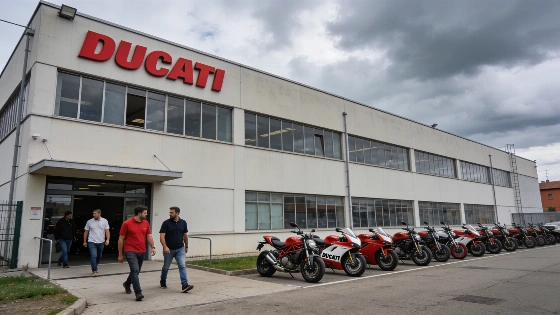
Volkswagen AG is considering selling Ducati, a move that would mark a major change in the group’s strategy. The Italian motorcycle brand, currently owned by Audi, is in focus as Volkswagen looks to simplify its portfolio and sharpen its competitive position.
Ducati is one of about 600 companies under review, out of the 2,000 that make up the Volkswagen Group. The review follows a recent board-approved plan to cut roughly a third of the group’s business holdings, aiming to reduce complexity and unlock value. Audi and Volkswagen have both said that no final decision has been made about Ducati. They have described the review as part of a broader approach to disciplined portfolio management, information from Bloomberg.
“Within the Volkswagen Group, we are committed to disciplined and responsible portfolio management,” Audi CEO Gernot Döllner told Bloomberg News. He confirmed that Ducati is part of the ongoing evaluation, but stressed that no final decision has been made. Analysts estimate Ducati’s market value at around €1.25 billion. Information from GuruFocus and Interfax, Ducati sells about 50,000 motorcycles a year. Last year, revenue was €925 million and operating profit was €52 million.
Ducati has excelled in racing, winning six consecutive MotoGP constructors’ championships since 2020. Despite this success and steady commercial results, Volkswagen’s push for efficiency has put even successful brands under review. Bloomberg notes that the current process is an evaluation, not a confirmed sale. Any move to sell Ducati could face resistance from labor representatives, as happened in 2017, when a similar plan was dropped.
Volkswagen’s appetite for restructuring is not new. In June, the company agreed to sell a 51% stake in its marine engine unit Everllence, a deal expected to bring in €7.4 billion. The previous attempt to sell Ducati in 2017 was abandoned after strong opposition from German labor representatives. This time, the board has made its mandate to trim non-core assets explicit.
As Volkswagen rethinks its global footprint, Audi is also considering US-based production for some SUV models, possibly using existing Volkswagen facilities or the new Scout Motors plant. The Audi Q4 e-tron is currently built in Zwickau, Germany, while larger SUVs such as the Q7 and Q8 are made in Bratislava, Slovakia. The Q9 is made there as well. The Q3 is produced in both Hungary and Ingolstadt. Döllner declined to comment on the future of Audi’s Neckarsulm plant, which faces an uncertain outlook for the next decade.
Volkswagen’s willingness to part with legacy brands is not new. Recent decisions have prioritized high-growth or strategically aligned assets, as seen when the group shifted focus from Seat to Cupra, a change reported earlier in the industry.
The possible sale of Ducati raises questions about the brand’s future. Its heritage and racing success, backed by a loyal customer base, make Ducati a unique asset and an attractive target for buyers interested in the premium motorcycle market. As Volkswagen moves forward with its restructuring, the review will indicate how far the group is willing to prioritize efficiency over tradition.