The Volkswagen Golf G60 shocked the 1990s with its raw acceleration and unique supercharger. This special edition outpaced many sports cars, mixing daily practicality with punchy performance that still stands out decades later.
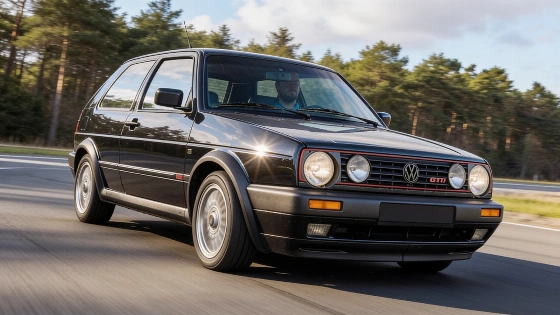
When the Volkswagen Golf G60 rolled out in 1990, it broke the mold for compact hatchbacks. This wasn’t just another GTI. It was built to punch above its class, often leaving bigger, pricier sports sedans behind in real-world driving.
The G60’s secret was its mechanical supercharger, the G-Lader. Unlike a turbo, the G-Lader gave instant boost at low revs. There was no turbo lag. The Golf felt sharp and alive from the first touch of the throttle. Volkswagen Classic records show the G60 was seen as a separate, advanced version of the Golf II, thanks to this supercharger tech.
The G-Lader supercharger, developed by Volkswagen, became one of the brand's most recognizable engineering achievements of the late 1980s and early 1990s.
Volkswagen’s engineers didn’t just focus on the engine. The G60 sat lower than other Golfs—20 millimeters at the front, 10 at the rear. It had stiffer, teflon-coated suspension parts. The chassis was tuned for quicker response. Fifteen-inch BBS wheels and wider fenders gave it a subtle, ready-to-run look. Still, the G60 kept a low profile. Parked at the supermarket, it looked like any other Golf. Its real power stayed hidden under familiar lines.
On paper, the numbers might not shock today: 0 to 100 km/h in 8.3 seconds, top speed of 219 km/h. But the G60’s real strength was its mid-range torque. It made 225 Nm at just 3,800 rpm, and kept more than 200 Nm from 2,400 to 5,800 rpm. The car always felt eager. The supercharger’s mechanical drive meant that after a short half-second pause, 80 percent of max boost was ready. Passing slower cars was easy and addictive. Automotive reference guides confirm the G60’s 1.8-liter engine made about 160 horsepower and drove the front wheels, setting it apart from regular Golf II models.
Inside, buyers could pick optional leather seats—a step up from the standard gray cloth. The cabin was practical, but the real story was on the road. In fast corners, the G60 felt planted and confident. The suspension balanced comfort with control. This wasn’t a loud, wild sports car. It was a sharp tool for drivers who wanted speed without shouting about it.
The Golf G60 is often seen as a transitional model between naturally aspirated GTI versions and the later, more widespread turbocharged hot hatches, reflecting Volkswagen's response to the growing European market for fast compacts.
Keeping the G-Lader supercharger in shape took effort. Only well-maintained cars still deliver the full G60 experience. But for those who drove it when new, the mix of daily use and raw power was hard to beat. Enthusiasts snapped up this last, most powerful Golf 2, even though it cost nearly twice as much as a base model.
Now, the G60 stands as proof of a time when bold engineering could turn a family car into a real performance icon. Its story matters even more as Spain faces the environmental cost of older cars, as shown in a recent report on emissions from aging vehicles. The G60 isn’t just about speed. It shows how a technical leap can change what people expect from a car, even decades later.
The Volkswagen Golf G60 proved what smart engineering can do. With the right tech and a push to try something new, even a practical hatchback could thrill drivers and challenge the best sports cars of its day. For those who care about driving feel and mechanical character, the G60’s reputation is deserved. Its appeal hasn’t faded, even long after production stopped.