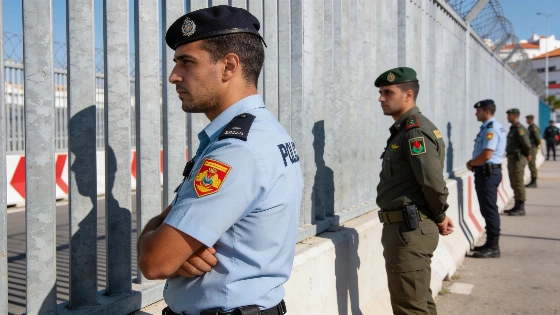
Ursula von der Leyen praised Spain and Morocco for handling the Ceuta border crisis. She insists the EU must reinforce its external borders to protect Schengen. The call comes amid ongoing migration pressures.
European Commission President Ursula von der Leyen has called for urgent reinforcement of the European Union’s external borders following the recent migration crisis in Ceuta. In a letter addressed to Spanish Prime Minister Pedro Sánchez, von der Leyen acknowledged the swift cooperation between Spain and Morocco, crediting both governments for their rapid response in returning thousands of people who crossed into the Spanish enclave irregularly. She emphasized that such decisive action helped prevent further unauthorized movement into continental Europe and maintained order at a critical entry point.
Von der Leyen’s message, accessed by EL PAÍS, marks her strongest statement yet on the Ceuta incident. She highlighted that the events in the autonomous city exposed vulnerabilities at the EU’s external frontiers, underlining the need to strengthen border controls, especially at high-risk locations like Ceuta, to safeguard the integrity of the Schengen area. The Commission president noted that, in recent years, irregular arrivals to the EU have dropped by 55%, with a further 37% decrease so far this year, attributing these results to coordinated European efforts.
While commending the operational success, von der Leyen also issued a clear call for solidarity among EU member states during migration emergencies. She assured Spain of the Commission’s continued support and stressed that mutual assistance remains central to the European project. Her letter comes after criticism that her initial public comments on the Ceuta situation lacked references to solidarity, a point she has since addressed directly in her correspondence with Sánchez.
Von der Leyen’s letter also included pointed reminders about the shared responsibility for protecting the EU’s external borders. She reiterated that the Union cannot tolerate illegal entries or attempts to use migration as leverage against member states. The Commission president advocated for enhanced surveillance and, where necessary, the use of physical barriers at critical points. She described Morocco as a key strategic partner in combating migrant smuggling and irregular migration, noting ongoing efforts to deepen structured cooperation with Moroccan authorities.
Her outline for EU migration policy focused on five main areas: working with partner countries to prevent irregular migration, reinforcing external borders, implementing immediate returns, dismantling trafficking networks, and strengthening return procedures. Notably, von der Leyen did not mention mass regularization or the establishment of deportation camps in third countries—topics that have sparked debate among some EU governments.
The Ceuta crisis has drawn significant attention across Europe, with Spanish authorities facing pressure to manage both humanitarian and security concerns. As reported in a related development, the local government in Ceuta previously called for a national emergency declaration in response to the surge in arrivals, highlighting the strain on local resources and the need for coordinated action. For further context on the local response and the scale of the challenge, see this detailed report on the Ceuta president’s appeal for centralized support: Ceuta president’s call for national emergency amid migrant influx.
Ceuta, located on the northern coast of Africa, is one of two Spanish enclaves bordering Morocco and represents a unique entry point into the EU. The Schengen area, which allows passport-free movement across much of Europe, relies on robust external border controls to function effectively. The recent events in Ceuta have reignited debate over the balance between humanitarian obligations and border security, as well as the role of cooperation with neighboring countries. The European Commission’s renewed focus on solidarity and border reinforcement signals a shift toward more coordinated and possibly stricter migration management at the EU’s external frontiers.