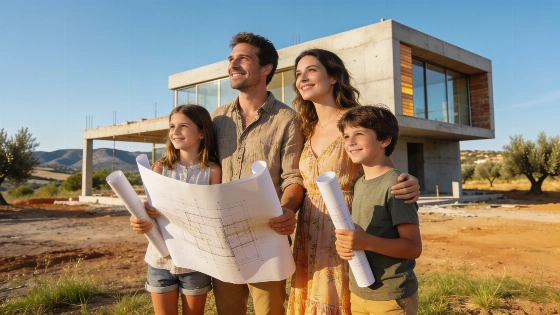
With Spanish property prices climbing sharply, more families are weighing the benefits of buying land and building a custom home. Experts say this route can offer greater long-term value, but it comes with unique challenges and demands careful planning.
In early 2026, Spain’s housing market saw prices jump by 12.9% year-on-year, according to INE data. New builds rose 9.1%, while second-hand homes surged 13.5%. As affordability slips further out of reach, a growing number of families are turning their attention to undeveloped land, hoping to create a home that fits both their needs and their budget.
Architect and professor José Luis Esteban Penelas, speaking to Telecinco, points to a key advantage: the so-called "double appreciation." Not only does the land itself tend to gain value over time, but a well-designed, energy-efficient home can also appreciate, often outpacing the returns seen in standard property purchases.
Personalization and Value
Unlike buying a finished apartment or house, building from scratch allows buyers to shape every aspect of their future home. Orientation, layout, materials, and energy efficiency can all be tailored to the family’s lifestyle. This level of customization isn’t just about comfort—it can also protect the property’s value over time, especially as energy standards and living expectations evolve.
Property portal Idealista highlights how orientation alone can impact natural light, indoor temperatures, and energy bills. A smart design can reduce reliance on heating and air conditioning, making the home both more pleasant and more economical to run.
Costs and Timelines
However, the potential for higher returns does not erase the upfront costs and risks. The price of a plot can account for 30% to 60% of the total budget, particularly in high-demand areas or where land is scarce. On top of that, buyers must factor in municipal permits, taxes, technical studies, architect and engineer fees, and the actual construction costs.
Building a home is rarely quick. Idealista estimates that bureaucracy, construction, and unforeseen delays can stretch the process to 12–24 months. This is a stark contrast to buying a move-in-ready property, where the timeline is often measured in weeks.
Before purchasing land, it’s essential to review local zoning laws, building allowances, access to utilities, and the physical condition of the site. A cheap plot may end up costing more if it requires extensive groundwork or faces regulatory hurdles.
Who Should Consider Building?
Constructing a home from the ground up is best suited to those planning to stay for many years and who are not in a rush to move. It’s especially attractive for families seeking a highly efficient, future-proof home designed around their routines, rather than adapting to the compromises of an existing property.
For buyers who prioritize speed, established neighborhoods, or minimal paperwork, the traditional route remains simpler. Building demands close oversight, flexibility, and a financial cushion for unexpected changes during the project.
Yet for those who plan carefully, select the right plot, and work with experienced professionals, the rewards can be significant: a home that fits their life and a combined land-and-building investment with strong appreciation potential. This approach is increasingly seen by architects as one of the most strategic moves in today’s Spanish real estate market.
Spain’s shifting demographics and rural depopulation have also led some to explore life outside the cities. Stories like the man who chose to live alone in a nearly abandoned village highlight both the opportunities and the challenges of starting anew on your own land.