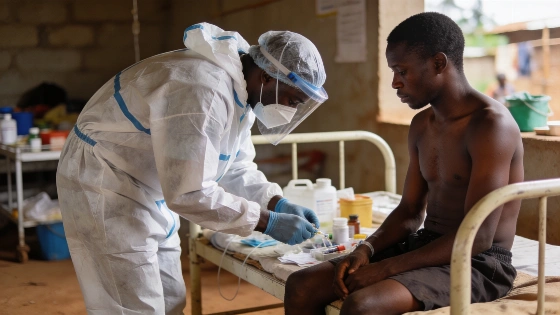
The Ebola outbreak in the Democratic Republic of Congo has reached six provinces. WHO believes containment is possible within three months if resources are mobilized. The situation is now the country's deadliest recorded outbreak.
The World Health Organization (WHO) has stated that the Ebola outbreak in the Democratic Republic of Congo, now affecting six provinces, could still be brought under control within three months. This assessment comes despite a surge in infections that has outpaced containment efforts and turned the current epidemic into the deadliest in the country's history.
According to the latest figures from the Congolese National Institute of Public Health, the outbreak, officially declared on May 15, has resulted in 4,945 confirmed cases and 2,325 deaths. In just 24 hours, authorities reported 101 new infections and 33 additional fatalities. These numbers have already surpassed the previous major outbreak in eastern Congo between 2018 and 2020, which caused 2,299 deaths, making the current crisis the second most lethal Ebola event globally after the West African epidemic of 2014–2016.
WHO emergency response coordinator Dr. Thierno Baldé, speaking from Bunia, emphasized that the three-month target remains achievable, but only if the international community provides sufficient resources. The rapid expansion of the virus is attributed to delayed detection of cases, fragile healthcare infrastructure, ongoing insecurity from armed groups, and limited access to remote communities. Additional challenges include population movement, misinformation, and distrust toward medical teams.
Many recent infections and deaths are occurring outside known contact chains, suggesting undetected transmission clusters. The outbreak is driven by the Bundibugyo variant of the virus, for which no approved vaccine or specific treatment currently exists, though clinical trials are underway. In response, WHO has deployed over 200 specialists and sent around 300 tons of supplies, while the United Nations has pledged an additional $30.5 million to strengthen the response. Since May, the epidemic has been classified as a public health emergency of international concern.
The spread of Ebola to new provinces, including the recent confirmation of a fatal case in Bas-Uélé, highlights the difficulties in containing the virus amid ongoing instability. The situation in Congo echoes broader regional challenges, as seen in other humanitarian crises such as the recent removal of migrant camps near Melilla, where Moroccan authorities dismantled settlements on Gurugú Mountain to address security concerns. Both cases underline the complex interplay between health emergencies and local conditions, from armed conflict to public mistrust.
For Spain and other European countries, the evolution of the Ebola outbreak in Congo is closely monitored due to the potential for cross-border health risks and the need for coordinated international response. The Bundibugyo strain's resistance to existing vaccines complicates prevention strategies, while the scale of the current epidemic underscores the importance of rapid detection, reliable information, and robust healthcare systems. The WHO's call for urgent support reflects the global stakes involved in halting the spread of Ebola and preventing further loss of life.