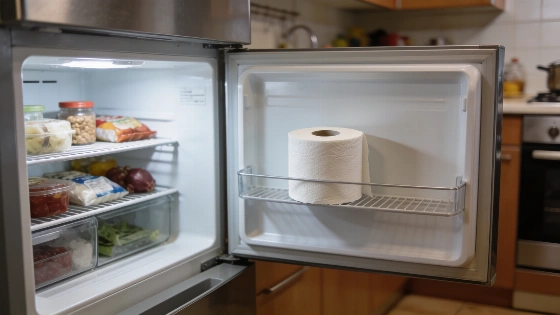
Placing a roll of toilet paper in the fridge is a trending tip for tackling humidity and smells, but scientific support is limited. Experts say cleaning and temperature control remain far more effective for food safety and freshness.
A roll of toilet paper on a refrigerator shelf is an unusual sight, but this domestic hack has been circulating in Spain for years. The idea is simple: the cellulose in toilet paper can absorb moisture from the air, potentially reducing condensation and helping with unwanted odors. As temperatures rise, the trick has resurfaced online, with some sources like Clim Profesional recommending a fresh, dry roll be swapped out every three to four weeks.
But does this method actually deliver on its promises? The science behind it is mixed. Cellulose is indeed a hygroscopic material, meaning it can attract and hold water molecules from the surrounding environment. Research published in Scientific Reports confirms this property in nanocellulose, showing that moisture content increases with higher humidity. However, these studies do not specifically address the effectiveness of a standard toilet paper roll inside a household fridge.
Moisture Absorption Limits
In practice, a dry, porous roll may absorb some humidity from the air inside the fridge. The extent of this effect depends on factors like the type of paper, the fridge's ventilation, and the overall humidity level. There is no reliable data quantifying how much condensation a roll of toilet paper can actually reduce in a domestic setting. As a result, experts caution that this is a limited home remedy, not a substitute for proper humidity control.
Odor Control: Fact or Fiction?
Some advocates claim that toilet paper can also help neutralize bad smells by absorbing moisture and airborne substances. Yet, there is no independent testing to confirm this effect inside a refrigerator. Major appliance brands such as Bosch recommend addressing odors at their source—by thoroughly cleaning the fridge and removing spoiled food. The US Department of Agriculture also prioritizes cleaning and suggests using baking soda or coffee grounds for persistent smells, rather than relying on paper products.
If an unpleasant odor appears, the first step should always be to check for spoiled items, spills, or hidden grime. Toilet paper may slightly dry the air nearby, but it does not eliminate the root cause of the problem. If odors return after cleaning, it's a sign to inspect food containers and surfaces again.
How to Try the Trick Safely
For those curious to test this method, the guidelines are straightforward: use a new, clean, and completely dry roll. Place it on an upper or side shelf, away from liquids, and ensure air can circulate freely. Replace the roll every three to four weeks, or sooner if it becomes damp or stained. Never use toilet paper to mask dirt or extend the life of questionable food. For odor control, thorough cleaning remains the most reliable approach. There is no need to add chemicals or fragrances to the roll, as these could affect nearby food.
Temperature and Storage Matter Most
According to AESAN, Spain's food safety agency, the ideal fridge temperature is between 0 and 5 degrees Celsius. Keeping the door closed as much as possible, avoiding overcrowding, and separating raw from cooked foods are all more important for food preservation than reducing humidity with paper. Some modern fridges even feature drawers that increase humidity to better store fruits and vegetables, highlighting that different foods require different conditions. While a roll of toilet paper can be tried as a minor absorbent, the fundamentals of temperature, cleanliness, and proper storage remain the keys to a safe and fresh refrigerator.