“There Is No Way to Peace, Peace Is the Way”: Gandhi's Philosophy of Nonviolence. The phrase "There is no way to peace, peace is the way" has become a symbol of nonviolence and personal responsibility for peace. Its message resonates with particular urgency amid ongoing conflicts and increasing polarization.
In today's world, where conflicts and aggressive rhetoric are increasingly prominent, the idea of nonviolence takes on new significance. The phrase "No hay camino hacia la paz, la paz es el camino," associated for decades with Mahatma Gandhi, has become not just a slogan, but a kind of guidepost for those seeking an alternative to violence and hostility. This thought emphasizes: peace is not a goal to be achieved one day, but a way of living and acting every day.
The meaning of the phrase
The essence of this phrase is that peace does not arise as a result of victory or compromise. It manifests in everyday actions, in the way a person speaks, reacts to disagreements, and builds relationships with others. Peace is not a reward for effort, but a discipline that demands a constant choice in favor of respect, honesty, and refusal to humiliate or pressure.
That is why this idea resonates in educational programs, social movements, and awareness campaigns. It is simple in form, yet profound in content: it is impossible to build a peaceful society using methods of violence or coercion.
Nonviolence as a principle
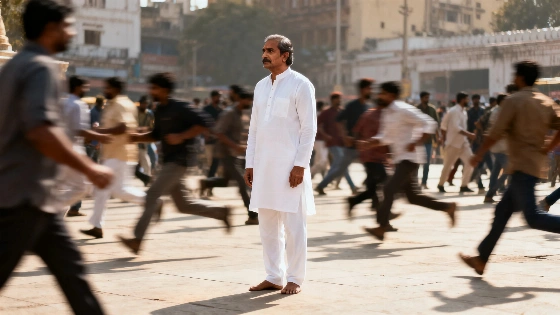
Gandhi's philosophy was built on the concept of ahimsa—the principle of non-harm, compassion, and rejection of aggression. As Talent24h notes, Gandhi applied this principle to the political struggle for India's independence, making nonviolent resistance the main tool against oppression.
However, for Gandhi, nonviolence was not limited to renouncing physical aggression. It required inner discipline, consistency, and a readiness to confront injustice without losing respect for the opponent. Peace in this context is not passive inaction, but an active stance that allows one to fight injustice without resorting to the same methods as the oppressors.
Authorship and Significance
Although the phrase “No hay camino hacia la paz, la paz es el camino” is often attributed to Gandhi, some sources link it to 20th-century American activist A.J. Muste. This clarification does not diminish the importance of the idea itself, which naturally became part of the tradition of nonviolent resistance and is now integral to the world’s view of Gandhi’s philosophy.
The key point of this thought is the inseparable connection between means and ends. For Gandhi, it was fundamentally important that the path to peace not contradict the very idea of peace itself. That is precisely why the phrase remains relevant: it reminds us that peace does not begin after conflict ends, but in how we conduct ourselves during disagreements, the words we choose, and how we respond to challenges.
Peace as a Daily Choice
In a time when disagreements quickly escalate into confrontation and social polarization becomes the norm, the idea of peace as a daily practice takes on special significance. It requires not only refraining from physical violence but also a conscious choice in favor of respect, honesty, and humanity even in the most difficult situations.
The phrase “No hay camino hacia la paz, la paz es el camino” serves as a reminder that peace is not a destination, but a process that begins with each individual action and word. That is where its strength lies: it calls us not to wait for change, but to become the source of change today.