XPENG and Zeekr now offer charging speeds up to 525 kW in Spain, pushing Tesla out of the lead. BYD’s Denza Z9GT brings 1,500 kW megacharging, but high prices and slow infrastructure mean the real contest is just starting.
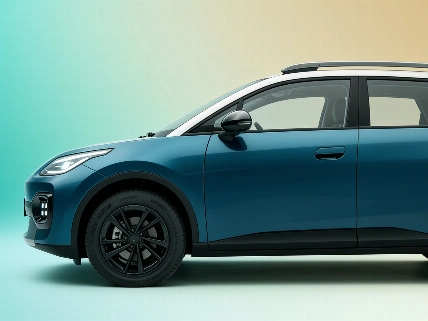
Spain’s electric car market has changed fast. Tesla’s Supercharger network and 250 kW peak charging are no longer the top standard. In 2026, XPENG and Zeekr jumped ahead, selling cars priced from €45,000 to €60,000 that can charge at 360 to 525 kW. These models use 800 V systems and LFP batteries. The numbers are not just on paper. Real tests show these cars can hit their fast charging claims—if the right chargers are available. XPENG’s official European specs confirm the G6 and G9 now run on 800-volt platforms with LFP batteries. The G9 can reach 525 kW, the G6 up to 451 kW. Both can charge from 10% to 80% in just 12 minutes.
But BYD’s Denza Z9GT has made the biggest jump. Its 1,500 kW Flash Charging system sets a new mark. This shooting brake, priced at €115,000, can go from 10% to 97% battery in under nine minutes. That’s an average of 720 kW—more than double what XPENG’s G6 manages. For now, this speed is only for buyers willing to pay a premium, and Spain’s charging network is still far behind. BYD’s own releases confirm the Denza Z9GT leads their Blade Battery 2.0 and Flash Charging push. Public demos in Asia and Europe have shown the car using BYD’s high-power network.
Zeekr has officially expanded into Spain, including Catalonia, through a local dealer network, confirming the commercial presence of the Zeekr 7GT in the market.
Charging race heats up
XPENG’s shift started with the 2025 European update for the G6 and G9. By moving to LFP cells that can handle 5C charging, the G9 now hits 525 kW and the G6 451 kW. Both reach 80% charge in 12 minutes. These are not just claims. Independent tests in Germany and Spain show the G6 can hold about 290 kW on average during the key 10–80% window. All XPENG models in Spain now use 800 V LFP batteries. Prices start at €42,380 for the G6 and €59,990 for the G9. Industry reports point out this is a big shift—Chinese brands are now leading the charge on fast charging tech in Europe.
Zeekr, which arrived in Spain in 2026, has focused on keeping charging power steady, not just chasing peak numbers. The 7GT, a sporty estate starting at €45,990, claims a 480 kW peak but usually stays below 325 kW in real use. Still, it matches XPENG’s charging times thanks to a flatter curve. The 7GT’s LFP battery can go from 10% to 80% in about 11 minutes. Even at 90% charge, it still pulls strong power. Zeekr’s 7X SUV and 001 model complete the lineup, but the 001 in Europe is limited to 200 kW—far less than the Chinese version, which already supports over 1,000 kW.
BYD has announced plans to complete 2,000 highway Flash Charging stations across Europe by the end of 2027, aiming to make ultra-fast charging widely accessible beyond demonstration events. This infrastructure rollout is seen as a critical step for the practical adoption of megawatt-level charging, as current public networks in Spain and most of Europe are still limited to much lower power levels. The expansion of BYD's proprietary network is expected to accelerate the transition to next-generation battery technologies in mainstream vehicles.
Tesla stalls as infrastructure lags
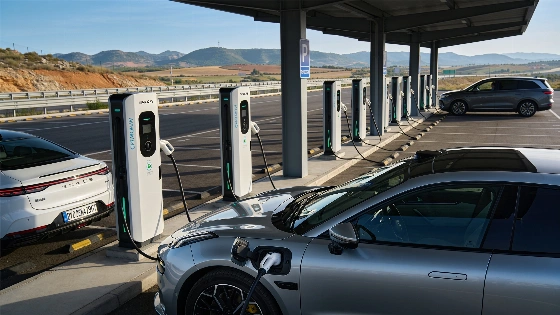
Tesla’s Model 3 and Model Y are still stuck at 400 V and 250 kW. This limit has not changed since 2019. Even the new Supercharger V4 stations do not raise these numbers for most models. Tesla still leads in efficiency and network integration, but its charging edge is fading. On Spanish highways, most fast chargers are capped at 150 kW. That means XPENG and Zeekr’s top speeds are often just theoretical. In these real-world conditions, Tesla’s time advantage almost disappears.
Change is coming, but slowly. Electra is setting up 26 charging points in Carabanchel with 600 kW Alpitronic HYC1000 units. XPENG has announced 1,000 kW chargers for Europe, starting in Denmark. The real leap will come when stations have their own battery storage, so they can deliver huge power even with limited grid supply. Until then, these new cars cannot show their full speed.
Megawatt charging and the price wall
BYD’s Denza Z9GT is the only car in Spanish showrooms that can use megawatt charging. Its 122 kWh Blade 2.0 battery runs at 1,000 V and can take up to 1,500 kW. Demos in Madrid and Paris have shown the car can add over 100 kWh in less than nine minutes. BYD says it will build 300 Flash Charging stations across Spain, open to any CCS2 car and priced below €0.50 per kWh. But the rollout is now set for late 2027. For now, no other BYD models in Spain use the Blade 2.0 battery, and this tech is out of reach for most buyers.
China’s battery makers are moving fast. CATL’s Shenxing 3, also LFP, claims to support 10C charging with peaks of 15C. That could mean a 10–80% charge in under four minutes for a 75 kWh pack. Geely’s Aegis Golden Brick battery, used in the Lynk & Co 10 and the Chinese Zeekr 001, has already hit 1,093 kW in certified tests. But in Europe, these cars are still held back by both battery limits and the lack of matching charging stations.
What the numbers mean for drivers
For Spanish drivers, ultra-fast charging is still limited by the grid. Most public chargers cannot give more than 150 kW, and only a few high-power units are running. Even the fastest cars have to slow down to match the network. As shown in recent comparisons, the real value of big numbers depends on the weakest link in the chain.
XPENG and Zeekr have set a new bar for charging speed in Spain. But drivers will only feel the difference when the charging network catches up. BYD’s megawatt plans are still out of reach for most, with high prices and slow rollout. The next big step will come when batteries like Blade 2.0, Shenxing 3, or Golden Brick show up in mainstream cars under €50,000—and when Spanish roads have chargers that can actually deliver these speeds. Until then, the race is not just between brands, but between new tech and the slow pace of real infrastructure change.