Belgium’s first shore power system for RoRo vessels has started at Zeebrugge. Ships can now cut emissions by connecting to renewable energy at the terminal. The project marks a shift in port sustainability.
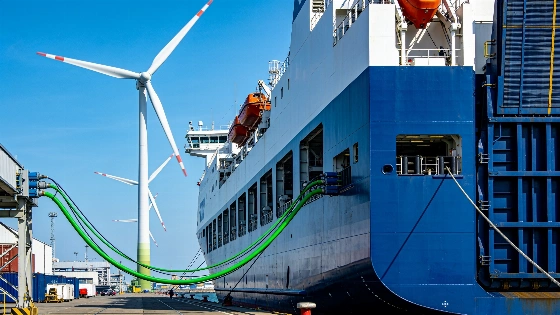
Belgium has launched its first shore power facility for roll-on/roll-off (RoRo) vessels at the Port of Zeebrugge, marking a significant step in reducing emissions from maritime transport. The new system, operated by International Car Operators N.V. (ICO) of the NYK Group, allows docked ships to connect directly to renewable electricity generated on site, eliminating the need to run onboard generators while at berth.
The facility became operational in June after a successful test phase, with a NYK-operated pure car and truck carrier (PCTC) being the first to use the system. This event not only set a national precedent for Belgium but also marked NYK’s first shore power operation for a PCTC at berth. The installation currently supports one vessel at a time, but ICO has indicated that expansion is possible as demand grows.
All electricity supplied to vessels comes from ICO’s own wind farm, which consists of 11 turbines located at the terminal. This ensures that the power used is fully renewable, directly contributing to lower CO₂ emissions, as well as reductions in nitrogen oxides and particulate matter. The terminal is equipped with the necessary cabling and infrastructure to connect ships, including those not originally designed for shore power, broadening the range of vessels that can benefit from the system.
The project received backing from the Flemish Agency for Innovation and Entrepreneurship (VLAIO), highlighting the role of public-private partnerships in advancing port decarbonization. ICO has positioned this investment as part of a broader sustainability strategy, which also includes more than 600 electric vehicle charging stations, 12,600 square meters of solar panels, and an automated parking system for 10,000 cars at the terminal.
According to ICO, the new shore power facility strengthens Zeebrugge’s position in the ongoing energy transition and prepares the port for stricter environmental standards in shipping. The company sees this move as a way to reinforce its leadership in sustainable port operations, both within Belgium and internationally.
For context, shore power—also known as cold ironing—enables ships to switch off their diesel engines while docked, significantly improving air quality in port areas. Across Europe, the adoption of shore power is accelerating as ports and shipping lines respond to tightening emissions regulations and growing pressure to decarbonize logistics chains. Zeebrugge’s initiative places Belgium among the countries actively investing in cleaner maritime infrastructure, a trend that is expected to expand as the European Union pushes for greener transport solutions.