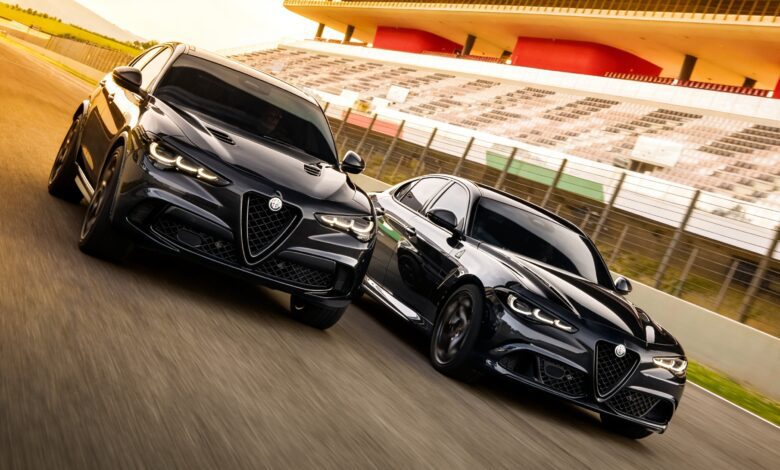
Alfa Romeo is preparing two major updates for the European market: the facelift of the Giulia and Stelvio models, which traditionally hold key positions in the premium D-segment and SUV class. According to Auto Bild, the Italian brand is revising its strategy and postponing the launch of the new versions to 2028, aiming to offer customers not only an expanded range of powertrains but also an unexpected technical highlight—a powerful six-cylinder engine similar to the one used in the Dodge Charger.
Change of course: why Alfa Romeo is delaying the premiere
The Giulia and Stelvio facelifts were initially planned for the coming years, but changing market conditions and weak demand for electric cars have forced Alfa Romeo’s management to adjust its plans. As Auto Bild notes, the company decided not to be limited to electric versions, but to add new petrol and hybrid variants to the lineup. This decision is directly related to global trends: despite regulatory pressure, demand for traditional engines in Europe and particularly in Spain remains significant, especially in the premium segment.
Main intrigue: an engine from the Dodge Charger
The key technical news for the upcoming Giulia and Stelvio will be the arrival of a 3.0-liter inline six-cylinder twin-turbo engine capable of producing up to 558 hp. This powerplant is already used in the Dodge Charger, and integrating it into Italian models marks a bold move for Alfa Romeo. In addition, the range will retain four-cylinder turbo engines with mild hybrid technology, as well as fully electric and plug-in hybrid versions. This approach will allow the brand to reach the widest possible range of customers—from fans of classic gasoline engines to advocates of electrification.
Design and Technology: What Else Will Change
The external changes to the future Giulia and Stelvio will not be merely cosmetic. According to Auto Bild, the facelift will bring new bumpers, a functional grille, and an upgraded cooling system for the powerful gasoline engines. This is especially relevant for the Spanish climate, where high summer temperatures require effective thermal regulation from vehicles. The new versions are expected to retain Alfa Romeo’s recognizable style, while becoming even more expressive and technologically advanced.
Hybrids and Electric Cars: Betting on Diversity
Alfa Romeo is not limiting itself to gasoline engines only. The upcoming Giulia and Stelvio range will include plug-in hybrid and fully electric versions, though details about the technical specifications of these models have not yet been disclosed. This move reflects a broader market trend: even premium brands are forced to offer alternative powertrains to meet the expectations of European buyers and comply with legislation. A similar approach was recently demonstrated by Ford, which expanded its lineup of electric vans for Madrid — more on this can be found in the story about the launch of the Ford E-Transit Custom and E-Transit Courier on the Spanish market.
For the Spanish market, the Giulia and Stelvio remain key players among premium sedans and SUVs, competing with German and British brands. The anticipation of new versions with a powerful six-cylinder engine could strengthen interest in the brand among enthusiasts and those who appreciate Alfa Romeo’s driving character. However, postponing the launch to 2028 means that the brand’s fans will have to be patient to see how the Italians realize their ambitious technological plan amid a rapidly changing market.