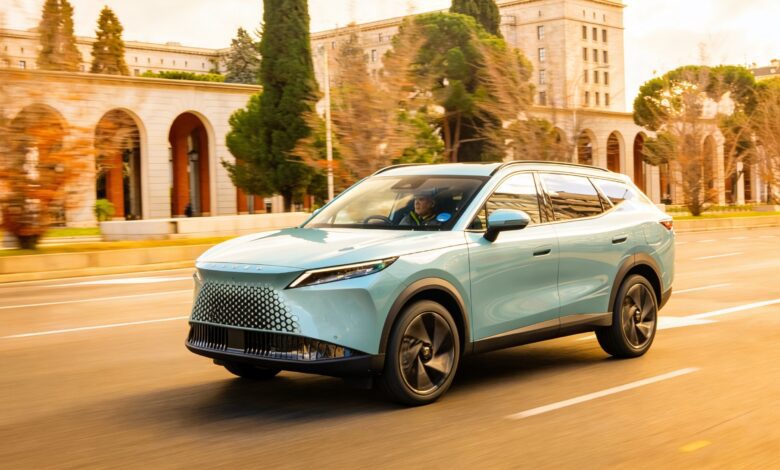
A new chapter has begun in Madrid’s automotive policy: the city authorities have officially excluded vehicles with the C sticker from the Cambia 360 subsidy program for 2026. This decision not only adjusts the support policy—it changes the very structure of demand in the capital’s new car market. Until now, models with this tag were a compromise choice for many buyers, balancing affordability, modernity, and relative environmental friendliness. Now, they are out of the game, giving way only to electrified vehicles.
Shifting priorities
Previously, the Cambia 360 program was more advantageous than the national Moves plan: while Moves supported only cars with ECO and CERO labels, the Madrid initiative allowed subsidies for petrol or diesel vehicles with the C sticker. This made the market more flexible and gave an opportunity to update vehicles for those not ready for an electric car or an expensive hybrid. Now, according to local authorities, priority is given exclusively to electrified technologies—fully electric, hydrogen-powered, hybrids with more than 90 km range, and models with the ECO label.
Terms and amounts
In 2026, Cambia 360 will operate for private individuals from April 20 to May 20. Applications can only be submitted through official dealers, self-registration is not provided. The subsidy amount for vehicles with the CERO label (electric, hydrogen, long-range hybrids) reaches €4,000, for models with the ECO label (hybrids, mild hybrids, gas-powered cars) — €2,000. In both cases, there is an additional €1,500 bonus for scrapping an old vehicle with an A or B label. The total program budget is €4.2 million, with the potential to increase to €14 million, and for all Cambia 360 initiatives — up to €23.3 million.
A market waiting for change
Removing vehicles with the C label from the list of subsidy recipients is not just a formality. These cars have so far accounted for a significant share of sales in Madrid, especially among those not ready for a rapid switch to electric vehicles. Now their appeal is diminished: without financial support, they lose in price and benefits to models marked ECO and CERO. However, as experts note, this will not necessarily accelerate the renewal of the vehicle fleet. On the contrary, many owners of older cars may prefer not to replace their vehicle at all if the ban on operating cars without a label is postponed or canceled again.
Contrast with other solutions
Paradoxically, while conditions for new cars with a C label have tightened, Madrid authorities have recently relaxed the rules for older vehicles without an environmental label. After two postponements of their complete ban, these vehicles are now allowed to drive in the city without restrictions, unless a high pollution alert is declared. This creates a contradiction: the incentive to buy new, albeit not the cleanest, cars disappears, and the motivation to get rid of old vehicles declines. This situation has already been discussed in the context of other initiatives, such as the introduction of an annual road tax, which was covered in detail in the article on the possible changes to the rules for car owners.
For the market, this means that cars with a C label find themselves in a kind of vacuum: they no longer receive support but are not subject to strict restrictions either. As a result, demand may shift either toward more expensive electrified models or—more likely for the average buyer—toward keeping old vehicles on the road. This creates new challenges for dealers, manufacturers, and city policymakers, who now have to seek a balance between environmental concerns, affordability, and the real possibilities of consumers.
For reference: in Spain, the C label is assigned to gasoline vehicles that meet Euro 4 or higher standards, and diesel vehicles that meet Euro 6 or higher. Until now, such cars were considered the optimal choice for those not ready for electrification but wanting to avoid restrictions on entering city centers. Now, however, their market position is becoming less certain, and their future increasingly depends on further decisions by the authorities.