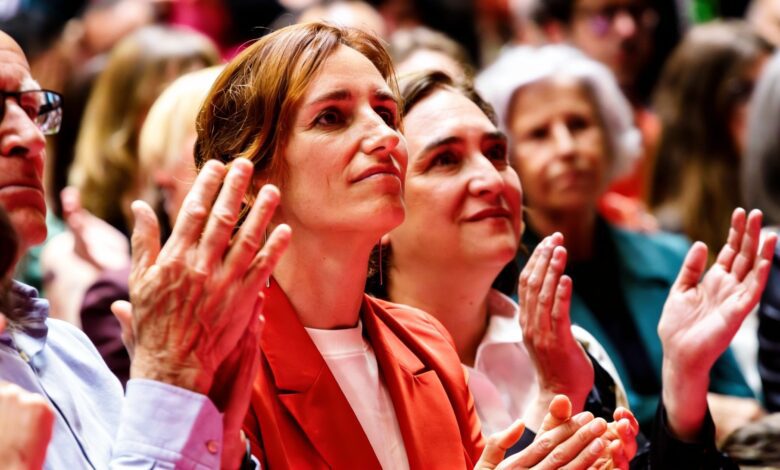
Spanish Health Minister Mónica García has officially confirmed her intention to run again for the Madrid Assembly. This comes amid preparations for municipal and regional elections scheduled for next year. García stated that she wants to lead the region and seek the removal of the current community president — Ayuso. According to her team, she will continue to serve as Health Minister for now.
The announcement was made at the traditional ‘La Madrileña’ event, held in the Paraiso park in the San Blas-Canillejas district. García emphasized that her goal is to become the next head of the region and highlighted her experience at the ministry and the actions taken to protect the healthcare system. She noted that in her three years as minister, she has managed to strengthen public healthcare and secure a number of commitments from Ayuso, including the creation of a registry of abortion objectors.
Intraparty competition
To return to the Madrid parliament, García will need to go through the Más Madrid internal primaries. At the moment, no other official candidates have been announced, but within the party, there is discussion about the potential candidacy of MP and co-chair Emilio Delgado, considered one of the key figures in the movement. The date for the primaries has not yet been set; however, according to some party members, the vote may take place after the summer period.
If García wins the primaries, it will be her third attempt to become head of the region. In 2021, she took part in the snap elections after the coalition with Ciudadanos collapsed, and then in 2023 she competed with socialist Juan Lobato. In 2026, Ayuso will once again be fighting to maintain her absolute majority.
Path to Politics
Before entering politics, Mónica García worked as an anesthesiologist, having graduated from the Faculty of Medicine at Complutense University in the 1990s. She took her first professional steps at Hospital 12 de Octubre, one of Madrid’s largest public medical institutions. García became known among her colleagues during the healthcare reforms under Esperanza Aguirre, when she became one of the public representatives of the Madrid Specialists Association.
In 2012, the regional authorities announced plans to privatize six public hospitals, sparking large-scale protests within the medical community. García was actively involved in these actions, speaking out against transferring management to private companies. As a result of legal challenges and pressure from healthcare workers, the project was stopped and the then Minister of Health, Lasquetty, resigned. It was after these events that García decided to move into politics and became one of the founders of Más Madrid.
Context and Reaction
At the event in support of García, representatives of the party in the Assembly and the Madrid City Hall also spoke. The leader of the city council faction, Rita Maestre, emphasized that García actively defends women’s rights and the interests of the healthcare system. Within the party, her candidacy is supported as a symbol of change and the fight for social rights.
Attention to the party’s internal process in Madrid is increasing against the backdrop of other high-profile political cases in the capital. For example, the National Court recently examined a case of surveillance against the former PP treasurer, where former Prime Minister Mariano Rajoy denied accusations of involvement in evidence destruction — detailed information on this process is available at russpain.com.
Monica García currently remains Minister of Health, but her return to Madrid politics could shift the balance of power in the region. In the coming months, focus will be on the Más Madrid primaries and on who will become Ayuso’s main rival in the 2026 elections.