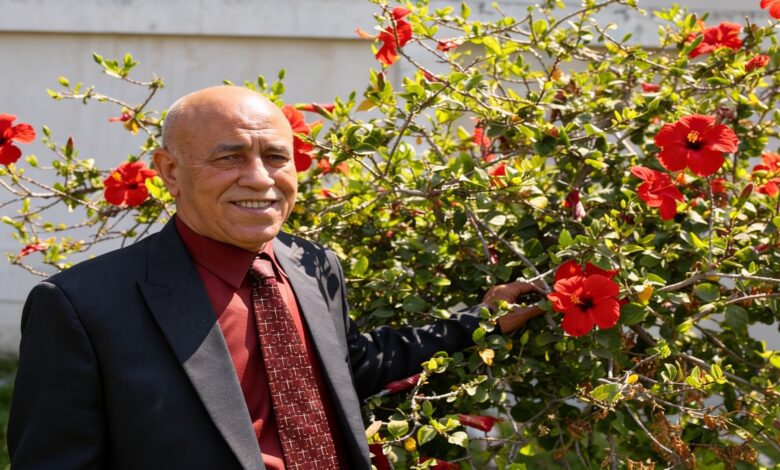
The Spanish authorities granted international protection to a family from Gaza, but exercising the right to leave proved impossible: the head of the family died without ever being able to leave the enclave. The story of the Elayla family vividly illustrates how even an official asylum decision does not guarantee rescue if there is no practical mechanism for evacuation.
Visa granted, but no exit
Abdul Hamid Elayla, his wife Samira, and son Wisam were approved for asylum in Spain in autumn 2024. The formal grounds were family ties: Abdul’s elder brother is a Spanish citizen, and another son has long lived in Seville. By law, such connections allow for protection under the family reunification principle. However, after the visas were issued, Spain’s Ministry of Foreign Affairs directed the family to the consulate in Istanbul to collect their documents. For Gaza residents, this requirement was impossible to fulfill: due to the Israeli blockade, the borders were closed, making travel to Turkey virtually impossible.
Wisam managed to get out through the Rafah border crossing only in December 2024, paying a significant sum. His parents remained in Gaza. Abdul suffered from a serious heart condition that required treatment abroad, but due to lack of access to medication, his health deteriorated. In the spring of 2025, he died, never receiving the chance to evacuate.
Bureaucracy and sealed borders
Even after Abdul received official approval for medical treatment abroad from the World Health Organization, leaving the territory proved impossible without permission from the Israeli authorities. The procedure requires coordination between Palestinian, Israeli, and international bodies, with the final decision resting with the Coordinator of Government Activities in the Territories (COGAT). In Abdul’s case, the Israeli side neither issued a formal refusal nor provided an answer, effectively blocking his departure.
Spanish consular services were unable to offer the family any alternative solutions. In one of the letters received by the family’s lawyer in February 2025, the consulate in Jerusalem stated directly: the Rafah crossing remains closed to those under international protection, and there is no information on when it may reopen. According to RUSSPAIN, such cases are not isolated: hundreds of people with permits for medical treatment or asylum cannot leave Gaza due to bureaucratic and political restrictions.
Personal tragedy and a shattered life
Abdul Hamid Elayla held a doctorate in law, worked in the legal department of the Palestinian Legislative Council, taught at a university, and was active in public life. After the war began in 2023, his family was forced to leave their home in the Tel Al-Hawa district and move to Rafah. Their house was destroyed in an airstrike, which was a severe blow for Abdul. His health deteriorated rapidly: chronic heart disease, lack of medication, stress, and poor living conditions led to several serious crises.
His son Wissam notes that the inability to help his father and the lack of access to medical care became a tragedy for the family. According to him, people in Gaza die not only from shelling, but also because they cannot leave to receive treatment. This story is just one of many where a formal protection decision does not translate into real rescue.
Context and reaction
The situation with evacuation from Gaza remains extremely difficult: even with visas and official permits, departure is impossible without coordination with Israeli authorities. International organizations report numerous delays and denials, especially for those who are gravely ill. According to lawyers, Spanish consular services are not always able to speed up procedures. The question of access to medical evacuation and the real implementation of asylum decisions remains unresolved.
The issue of being unable to exercise rights even with official documents and government decisions has repeatedly been the subject of discussion in the Spanish media. For example, the host of La Hora de La 1 previously raised concerns about the transparency and integrity of public institutions, which was examined in detail in the article about Silvia Intxaurrondo’s statements on TVE.