The Madrid City Hall has announced preparations for the largest plan in decades to increase building density in new neighborhoods in the south of the capital. Preliminary estimates suggest that the number of apartments in five key areas could rise from 120,000 to more than 300,000, while the population could grow from 327,000 to 818,000 people. Such a leap is comparable to adding an entire city the size of Seville or Zaragoza to Madrid’s boundaries.
Density over expansion
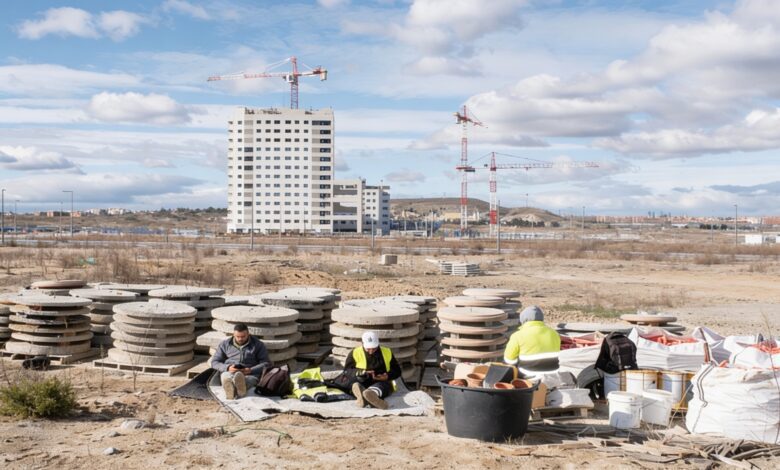
Authorities explain that the previous approach, characterized by low-density development, led to prolonged delays in the construction of schools, clinics, and transport facilities. In areas like El Cañaveral, where basic infrastructure is still lacking after eight years, residents continue to face a shortage of essential services. Now, the focus is on doubling density — from 35 to around 70 apartments per hectare. This is expected to speed up the rollout of transportation and social facilities, as a high concentration of residents makes such projects economically viable.
Challenges for infrastructure
However, implementing the plan requires solving a number of complex issues. According to representatives of the architectural community, there are no technical limitations on connecting water and electricity—utilities are designed for such loads. It is much more difficult to ensure the simultaneous emergence of transport and social infrastructure. Authorities admit: if housing appears faster than the metro or schools, new neighborhoods risk repeating the mistakes of El Cañaveral. The municipal strategic plan emphasizes that lagging infrastructure directly affects quality of life and territorial cohesion.
Debate on benefits and social policy
The question of who will benefit from increased density—the city, developers, or future residents—remains open. The project provides that from 50% to 58% of new apartments will fall into segments with varying degrees of protection. This should restrain price growth and make housing more affordable. At the same time, a mechanism for distributing profit from increased building heights is under discussion: whether this advantage will go to the municipality, landowners, or private companies.
Transport and the urban environment
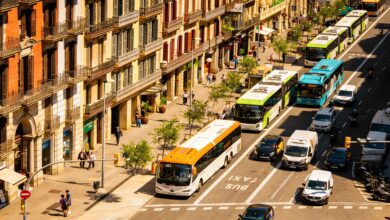
Experts emphasize: without the development of public transport, any attempt to rapidly increase density may lead to a transport collapse. The authorities are already testing dedicated bus lanes and expanding the public bike network, but a full metro system in the new districts remains a prospect for the future. It is important for transport solutions to be implemented simultaneously with housing; otherwise, new neighborhoods risk remaining isolated.
Alongside Madrid, similar approaches to increasing urban density are being discussed in Catalonia, the United Kingdom, and the Netherlands. In the capital itself, density in central areas already exceeds 140 apartments per hectare, while in new zones, about 70 are currently planned. According to RUSSPAIN, any changes in Madrid’s housing market quickly affect property values in the suburbs and neighboring municipalities.
In the context of discussing urban strategies, it is worth noting that infrastructure and safety issues have already attracted attention in other regions. For example, in Valencia, the transport company Ferrocarrils de la Generalitat Valenciana did not receive a timely warning about the risk, which led to an investigation — more details can be found in the article on the actions of emergency services in Valencia.
Background: plans and prospects
Currently, 150,000 new apartments have already been approved for construction in Madrid, with more than 100,000 of them located in the southeastern districts, including El Cañaveral. If the density is increased to 70 apartments per hectare, the population growth could reach up to half a million people—comparable to the population of Bilbao. Authorities emphasize that synchronizing the construction of housing and infrastructure will be a key challenge in the coming decades.