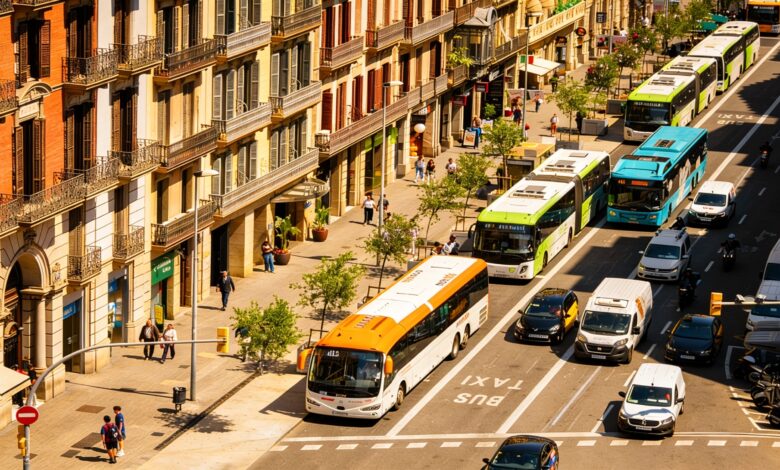
A debate is heating up in Barcelona over the future of intercity buses in the city center. City authorities have announced plans to create new bus stations on the outskirts—in the areas of plaza Espanya, Sagrera, and Diagonal. The main goal is to sharply reduce the flow of intercity buses arriving daily in the center and to ease congestion on streets like Ronda Universitat, which for many years has effectively become an open-air bus terminal.
Restrictions for buses
Barcelona’s First Deputy Mayor Laia Bonet confirmed in an interview with EL PAÍS that the authorities intend to move buses out of the city center. This decision sparked a sharp reaction from transport operators: representatives of the Fecav Federation believe that buses are being treated as ‘second-class transport.’ In their view, if buses are banned from bringing passengers to the center while metro and trains continue to do so, it will lead to discrimination and an increase in private car usage.
The situation worsened against the backdrop of the ongoing Rodalies crisis: due to disruptions in rail service, the number of daily bus trips has risen from 6,000 to 7,000. According to Laia Bonet, about 270,000 people use buses to travel to and from Barcelona every day. However, the existing infrastructure cannot cope with this volume, and dozens of buses continue to stop right on the streets.
Residents demand change
Residents of Ronda Universitat, where over 50 bus stops are located along just 350 meters of sidewalk, have been complaining for years about noise, air pollution, and constant queues. Locals say the situation has only worsened: buses run every 10 minutes, and crowds and litter have become a regular part of the landscape. Some note that the authorities and the Generalitat missed the chance to build an underground bus station at Glòries Square to ease congestion in the city center.
Activists from the Eixample Respira platform admit they have not studied the issue in depth, but are surprised that the authorities are simultaneously relocating the Sants bus station and claiming to support intermodality. In the Sagrada Familia area, there are also complaints about noise and pollution due to the number of buses.
Transport companies and politicians oppose the plan
Transport operators fear that the new restrictions will hit ordinary passengers who commute to work and cannot afford electric cars. ERC leader and Barcelona mayoral candidate Elisenda Alamany stated that until public transport operates reliably, only tourist buses should be restricted, not those used by residents.
Local grassroots groups such as SOS Ronda Universitat are recording a daily increase in the number of buses and believe the situation became critical following disruptions to Rodalies. According to them, even widening the sidewalks has not solved the problem: the street still resembles an improvised bus terminal.
Context and new technologies
Barcelona authorities continue to seek solutions to the city’s transport problems. Recently, a unique 6G testing ground was opened in the capital of Catalonia, which, according to experts, could change the approach to urban innovation and infrastructure. Learn more about the launch of this center in the story about new technologies in Barcelona.