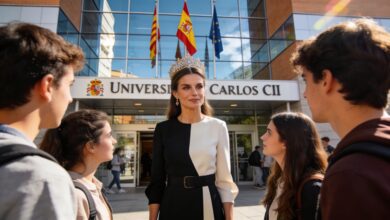
A new phase of an experiment to maintain order in educational institutions has begun in Catalonia: now Mossos d’Esquadra officers in plainclothes are working not only in secondary schools and vocational training centers, but also in regular primary schools. According to authorities, the pilot project is already operating in 14 educational institutions, involving six specially trained police officers.
The decision to expand the plainclothes Mossos presence is explained not by an increased threat, but by the desire to shift from responding to incidents to preventing them. As Catalonia’s Minister of Education, Ester Nyu bó, emphasized, this is not an emergency or a security crisis. According to her, isolated conflicts are recorded in the region, which sometimes affect schools, but there is no systemic threat.
Prevention instead of response
The pilot project includes institutions from various cities and rural areas: two centers in L’Hospitalet, one each in Prat and Sabadell, as well as schools near Vic, Tàrrega, and the Pyrenees of Lleida. The selection criteria were not related to the level of conflict, but rather considered geographical proximity and the administration’s willingness to cooperate. Authorities emphasize that all schools joined the project voluntarily.
The new ‘convivencia agents’ have undergone specialized training in mediation and conflict prevention. They work closely with school administrations but do not attend classes or participate in teaching staff meetings unless their involvement is required. In some institutions, such as in Prat and Sabadell, police officers are present on the premises at all times; in others, they oversee several schools simultaneously.
Reaction and debate
The introduction of police officers provoked a mixed response: some educators supported the initiative, while unions strongly opposed it, noting the lack of prior consultation. Authorities explain that such pilot projects are often launched without broad publicity in order to assess their effectiveness in practice. On Monday and Tuesday, protests took place outside schools in L’Hospitalet and Vic, drawing several dozen participants.
The Department of Education emphasizes that the new agents do not replace existing conflict resolution professionals—social educators, integration specialists, and bullying prevention coordinators. Their role is to complement existing resources, not supplant them. Unlike ‘tutor agents’, who appear at school only when a problem arises, ‘convivencia agents’ are integrated into the school community and can prevent incidents at an early stage.
Assessment and outlook
Interim results of the pilot project will be summarized at the end of the academic year, and final results by the end of the calendar year. If the outcomes are positive, authorities are prepared to consider expanding the program to other schools, but there are currently no plans for large-scale implementation. The Department of Education notes that the initiative arose at the request of local services, which have seen an increase in appeals from teachers and administrators regarding conflicts in the school environment.
It is important to note in context that authorities in Catalonia regularly introduce new measures to support social and educational structures. For example, a mechanism for automatic payments to families awaiting care assistance was recently launched, which was covered in detail in the article on new benefits for dependent residents of the region.