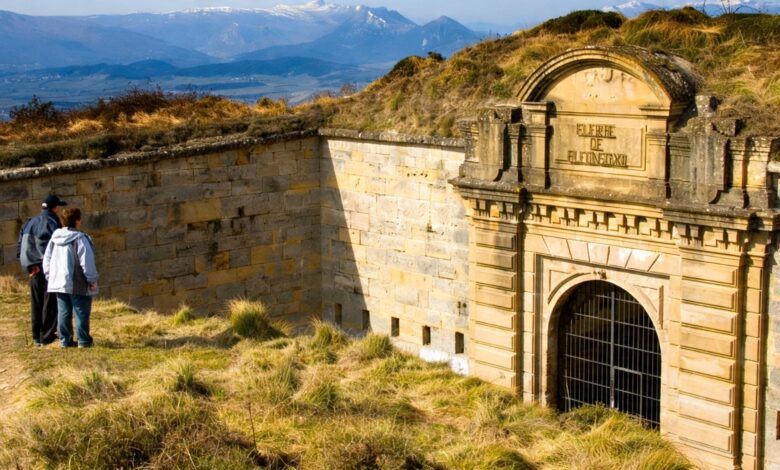
The Spanish government has officially granted the San Cristóbal (Alfonso XII) fort on Mount Ezkaba near Pamplona the status of a site of democratic memory. The decision was published in the Boletín Oficial del Estado and concerns a site that was used as a prison for political detainees during the Civil War and the subsequent dictatorship. Over different periods, more than 4,000 people were held here, many of whom were arrested for their political views or membership in banned organizations.
Historical episode
One of the most tragic events associated with this place was the mass escape attempt on May 22, 1938. On that day, 795 inmates made a desperate bid for freedom, taking advantage of a moment during dinner. The plan was developed by a small group of prisoners who managed to disarm the guards and incite the rest to flee with cries of “¡Sois libres! ¡A Francia!” Most of the escapees were poorly dressed, exhausted, and lacked the means for a long journey through the mountains to the French border.
The regime responded quickly and harshly: the army, Civil Guard, and Falange joined the search. Only three managed to reach France. The rest were either killed in the mountains or captured again. According to official data, 585 people were detained, and 14 organizers of the escape were executed at the Pamplona cemetery in September of the same year.
Measures to preserve memory
The published resolution emphasizes that recognizing the fort as a memorial site is not only an act of justice for the victims, but also an important step toward preserving historical truth. The document notes that basic human rights were violated within these walls, and thousands of people were imprisoned for their political beliefs or for belonging to organizations banned after the military coup.
As part of the new measure, special information panels and digital resources telling the story of those years will be installed on the fort’s grounds. Memorial plaques and educational events are also planned. The presentation of the decision was attended by representatives of the government and regional authorities of Navarre, including the Secretary for Memory and the regional councilor Ana Ollo.
Context and other cases
The issue of historical memory and the investigation of crimes committed during the dictatorship remains relevant for Spain. In recent years, the authorities have intensified efforts to restore justice for the victims of political repression. In this context, it is worth noting other high-profile cases linked to attempts to conceal evidence of abuses during the dictatorship years, as was revealed in the investigation into attempts to destroy compromising material on Rajoy in Madrid.