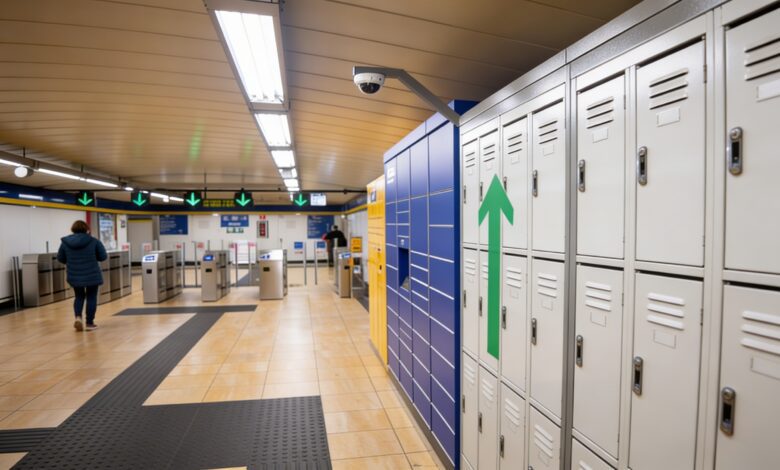
The introduction of smart parcel lockers in the Madrid metro has become a noticeable improvement for city residents. Now passengers on line 3 can pick up their orders right on the go, saving waiting time and eliminating the need to coordinate with courier schedules. This solution is especially relevant for those who do not have a concierge at home or are often away during working hours.
As El Pais notes, the Metropaq project launches with 57 lockers installed at 19 stations along line 3. Each locker is equipped with three terminals of different sizes, enabling the service to handle more than 3,000 shipments daily. The service operates every day, from early morning until late at night, making it as convenient as possible for most city residents.
Logistics and new opportunities
Parcel delivery is organized with the specifics of the city’s infrastructure in mind. Each morning from 4:30 AM, the Villaverde depot begins receiving shipments, after which a special train delivers them to Argüelles station. The parcels are then distributed to eight key points along the line, and CITYlogin staff place them in the smart lockers. This approach helps minimize traffic congestion and reduces the number of courier vehicles in the city center.
According to El Pais, the launch of Metropaq does not affect metro operations and does not cause any additional inconvenience for passengers. Authorities emphasize that the project not only makes life easier for residents but also helps reduce traffic congestion and emissions since it cuts down on traditional in-city deliveries. In the future, the service is expected to expand to other lines of the capital’s metro.
Partners and technical details
Major logistics companies—SEUR, Amazon, and GLS—are participating in the project. Each provides its own terminals, allowing users to choose the most convenient option for receiving parcels. To access a locker, simply scan the QR code received when placing the order. The entire process takes just a few minutes and does not require any extra steps.
The system is designed to operate year-round, with access to lockers available from 6:00 to 1:30. This is especially important for those who use the metro during off-peak hours. According to RUSSPAIN.COM, such services could become standard in large cities where high population density and traffic call for new delivery solutions.
Impact on the urban environment
Madrid authorities see metro stations as new logistics hubs, helping to optimize urban delivery and ease the burden on city roads. According to estimates, Metropaq’s introduction can prevent over 50,000 kilometers of daily trips currently linked to traditional delivery. This not only saves resources but also improves the city’s environmental situation.
The second phase of the project logically followed the pilot program on Line 12 (MetroSur), which has already transported more than 110,000 shipments. The system is now expanding to include new districts and stations. In the evening, a dedicated train makes stops at Alcorcón Central and El Bercial stations to collect cargo for further delivery to the Loranca distribution center.
Context and trends
In recent years, Madrid has actively introduced innovative solutions for urban development. For example, authorities recently invested significant resources in the growth of vertical gardens along the M-30, which has also become a notable event for the capital. More on such initiatives can be found in the article about expanding green walls along key routes on the RUSSPAIN website. Such projects show that the city is focused not only on technological advancement, but also on environmental improvements.
Using transport infrastructure for logistics is becoming a trend in European cities. Barcelona and Paris are already testing similar approaches, but the Madrid experience stands out for its scale and integration with daily urban life. In the coming years, new services are expected that will combine convenience, sustainability, and technology.