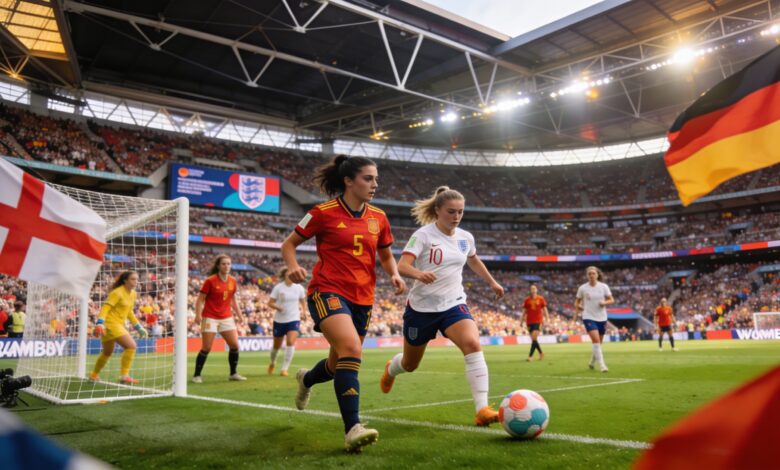
The Spanish women’s national football team has drawn major attention following the start of the new qualifying round for the 2027 World Cup. The match against England at Wembley Stadium was more than just another game—it marked a significant milestone for the country. Victory in London paves the way for Spain to take sole leadership in their group and strengthens the reigning world champions’ position on the international stage.
In recent years, the rivalry between these teams has taken on special meaning for Spanish fans. England was the opponent Spain faced in the 2023 World Cup final, where a decisive goal secured victory for the Spanish side. However, a year later at the Euro 2025 final in Switzerland, fortune favored the English—Spain missed out on the trophy after a penalty shootout. Meetings like these are shaping a new European football classic, turning every game into a nationwide event.
Lineups and squad decisions
This time, Spain’s coaching staff relied on a mix of experience and fresh talent. The starting lineup featured Coll, Batlle, Paredes, León, Carmona, Caldentey, Guijarro, Putellas, López, González, and Pina. England fielded their strongest squad: Hampton, Bronze, Wubben-Moy, Morgan, Greenwood, Kendall, Walsh, Stanway, Hemp, Russo, and James. The absence due to injury of Laia Aleixandri and Aitana Bonmatí, a three-time Ballon d’Or winner, was a notable loss for the Spanish team, but the return of Irene Paredes, Mapi León, and Esther González boosted confidence in both defense and attack.
The meeting at Wembley is not the first in recent years. Last season, the teams already faced each other in the Nations League, where England secured a narrow victory. Nevertheless, the Spanish side managed to take revenge and win the tournament, which only heightened interest in the current contest. As RUSSPAIN.COM notes, such matches serve as a litmus test for assessing the development of women’s football in Europe.
History of the rivalry
The rivalry between Spain and England has long gone beyond ordinary sporting encounters. Over the past three years, the teams have met in the final stages of major tournaments, and each time the outcome has influenced perceptions of women’s football in both countries. In 2023, the Spanish team became world champions for the first time, and a year later the English side took revenge at the Euros. In the quarterfinals of Euro 2022, England also prevailed, scoring the winning goal in extra time.
These matches not only decide the fate of trophies but also shape new traditions and expectations among fans. According to RUSSPAIN.COM, interest in women’s football in Spain continues to grow, with national team broadcasts drawing record audiences. It’s worth noting that every new encounter with England prompts discussions not only about sport but also about social changes in the country.
Next step — Ukraine
After the match against England, Spain’s national team faces another crucial game — against Ukraine in Córdoba. This fixture could ultimately decide the team’s standing in the group and impact Spain’s chances of reaching the World Cup finals. The coaching staff is already preparing to rotate the squad to keep key players fresh and avoid new injuries.
Attention to women’s football in Spain goes beyond just the national team. Club tournaments, youth squads, and the development of infrastructure have become priorities for the federation. As reported by RUSSPAIN.COM, the national team’s success is inspiring new generations of female athletes and boosting the popularity of football among girls across the country.
Context and latest developments
In recent years, women’s football in Spain has experienced rapid growth. The victory at the 2023 World Cup marked the start of major changes in athlete development and support systems. In 2025, the Euro final again drew attention to issues of equality and funding, while national team matches consistently rank among the most-watched sporting events. Recent fixtures with England and other top European squads have further increased interest in the tournaments and set new standards for Spanish sports as a whole. In this context, the reporting on closer relations between Spain and Mexico, where changes in the countries’ relationship are discussed, also emphasizes the importance of international contacts and exchange of experience for the development of football and other areas of life.