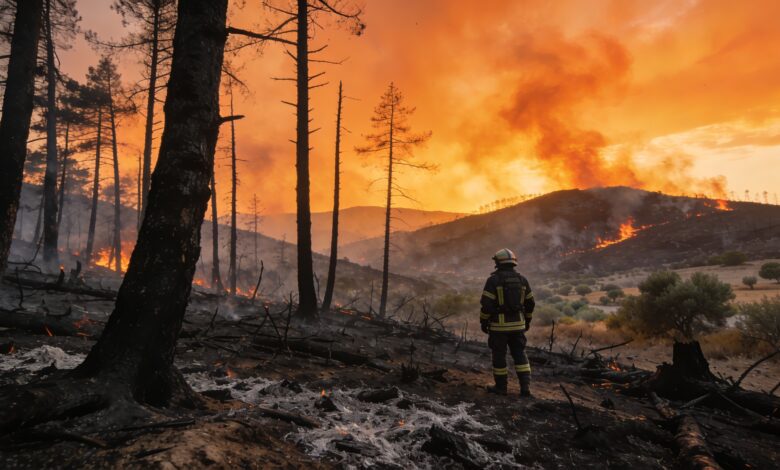
In 2025, Spain found itself at the center of a climate crisis: the country experienced its largest wildfires on record and faced prolonged periods of extreme heat. According to a recent report prepared by the Copernicus Climate Change Service and the World Meteorological Organization, temperatures in most regions of Europe, including Spain, significantly exceeded average levels.
Abnormal heat and its consequences
In southern and eastern Spain, the number of days with temperatures above 32°C was 50 more than usual. Overall across Europe, 2025 set a record for the proportion of territories exceeding average annual temperatures—hot weather covered at least 95% of the continent. The warming was particularly noticeable in subarctic regions, where the longest heatwave ever recorded was registered in July: temperatures near and beyond the Arctic Circle reached up to 34.9°C.
The report notes that since the 1990s, the Arctic has been warming faster than the rest of the world, resulting in accelerated glacier melt and a reduction in snow cover. In March 2025, the area of snow cover in Europe was 31% below the multi-decade average—comparable to the size of France, Italy, Germany, Switzerland, and Austria combined. Iceland’s glaciers lost their second largest mass ever recorded, while the Greenland ice sheet shrank by 139 gigatons, directly contributing to rising global sea levels.
Fires and emissions
In 2025, Spain suffered the most severe losses from forest fires: more than 400,000 hectares burned. The Zamora region was particularly affected, where the area of a single fire reached 40,081 hectares—this is the largest fire in the country since 1968. Within one week, wildfires in northwestern Spain and northern Portugal triggered record atmospheric emissions over the past 23 years. In total, across Europe, fires destroyed over one million hectares, and emissions from wildfires reached the highest levels ever recorded.
The environmental and social consequences proved extremely severe. In addition to damage to nature, the fires affected local communities and provoked a political response. In reaction, the Spanish authorities announced the preparation of a Climate Emergency Pact, which aims to strengthen measures for adaptation and prevention of such disasters.
Marine heat and threats to ecosystems
Not only land, but also the sea experienced the effects of warming. In 2025, the Mediterranean Sea became the warmest ever recorded: the average surface temperature reached 21.5°C, which is 1.2°C above normal. These conditions lead to annual marine heatwaves, which now cover the entire basin. This increases stress on marine ecosystems, particularly for Posidonia oceanica—the endemic plant whose area has declined by a third over the past 50 years. Scientists emphasize that preserving and restoring this aquatic vegetation is critically important for the sustainability of the Mediterranean region.
Rising sea temperatures and the increasing frequency of extreme weather events have already made new safety and adaptation measures necessary. For example, in Catalonia, authorities are introducing backup water supply systems to protect residents during climate emergencies — read more about this in the article about new water supply initiatives in the region.
Risks for the future
The Copernicus and UN report emphasizes: accelerating warming and the growing number of natural disasters demand urgent solutions in policy and governance. The European Commission has already identified the rising risk of wildfires as one of the main challenges, while Intergovernmental Panel on Climate Change (IPCC) forecasts indicate a continued increase in threats across all regions of Europe. Authorities and experts agree that adaptation and mitigation efforts must be based on scientific data and modern climate models.