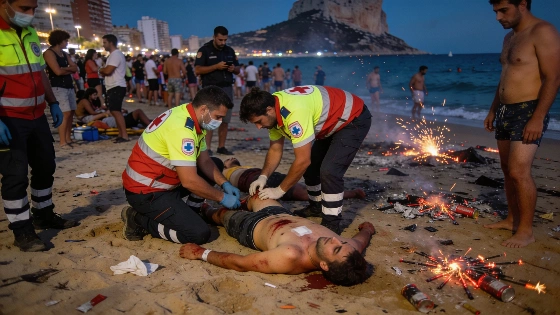
A misdirected firework shell during Castell de l’Olla in Altea caused 27 injuries. Eleven people suffered burns and required hospital care. The event drew thousands to the Alicante coast.
A serious accident disrupted the Castell de l’Olla fireworks display in Altea (Alicante) last night, when a pyrotechnic shell unexpectedly changed trajectory and struck a group of spectators on the beach. The incident left 27 people injured, with at least 11 suffering burns severe enough to require transfer to specialized burn units in Alicante and Villajoyosa. The remaining victims were treated for contusions and minor injuries, according to event organizers and the regional emergency coordination center.
The Castell de l’Olla is one of the most popular summer events in the province, attracting thousands of visitors each August. This year’s edition was notable for the planned use of 1,600 kilograms of gunpowder—the largest amount in the event’s history. Fireworks are launched from floating platforms anchored offshore, drawing crowds to both the beaches of Altea and boats moored nearby. The accident occurred when one of the shells deviated from its intended path and landed among people gathered on the sand.
Initial reports from the organizing Cofradía indicated that 27 people were hurt. Fourteen of them were taken to the private Hospital Imed, which manages the event’s medical response. From there, 11 patients with burns were transferred to the burn unit at Hospital Doctor Balmis in Alicante. Public health services also transported three individuals from the Altea health center: a 55-year-old man and a 24-year-old woman with burns were sent to Hospital Marina Baixa in Villajoyosa, while a 19-year-old with contusions was taken to Imed.
The scale of the incident has raised questions about safety protocols at large public events involving pyrotechnics. While the Castell de l’Olla is known for its elaborate displays and festive atmosphere, the use of record amounts of gunpowder this year may prompt a review of risk management measures. Similar concerns have surfaced in other recent incidents involving fire and public gatherings, such as the large-scale wildfires in Ávila and Vall d’Uixó, which were analyzed in detail in a previous report on the challenges of managing fire-related emergencies in Spain.
Events like Castell de l’Olla are central to the summer calendar in Alicante, drawing both locals and tourists. The accident highlights the importance of robust emergency planning and coordination between private and public health services. In Spain, regulations for pyrotechnic events are set at both national and regional levels, with local authorities responsible for enforcement. The incident in Altea may lead to renewed scrutiny of these rules, especially as festivals and public celebrations continue to grow in scale and complexity across the country.