Two major wildfires in Ávila and Vall d’Uixó left thousands of hectares destroyed. Both were deliberately set, but the circumstances differ. Authorities are still piecing together what happened and why.
Two of Spain’s largest wildfires this July—one in Burgohondo (Ávila), the other in Vall d’Uixó (Castellón)—have left investigators with more questions than answers. Both blazes were intentionally started, yet the details and suspected motives remain unclear. The Civil Guard’s environmental unit, Seprona, is leading efforts to reconstruct the critical first hour of each fire, as local communities struggle to understand how events unfolded so rapidly.
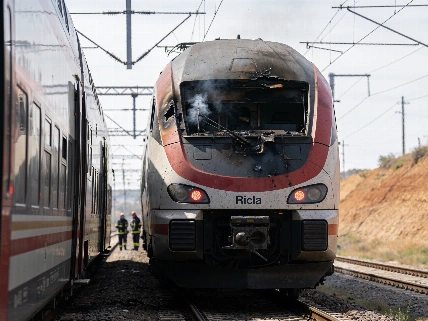
In Vall d’Uixó, residents recall the confusion of that Saturday morning. The first fire was reported at 10:15 near a vacant lot, a site that had already seen a blaze extinguished just a week earlier. As firefighters finished their work and prepared to leave, a second alarm came in—this time, flames erupted near a temporary school in the Carbonaire neighborhood, close to the mountainside. The proximity and timing of the two outbreaks have led many locals to suspect a connection, though officials have not confirmed this publicly. Within minutes, what seemed a manageable incident escalated into a fast-moving wildfire that blackened the surrounding hills.
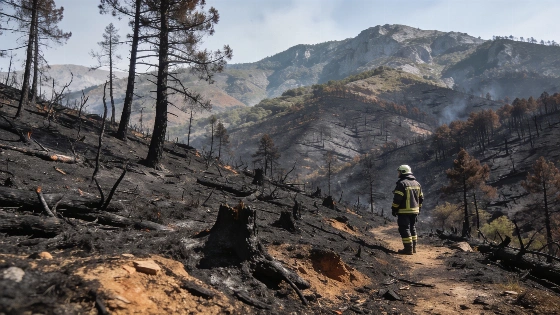
Emergency crews faced a perfect storm: extreme heat, strong winds, and parched vegetation after four heatwaves. According to local officials, the priority in the first moments was to protect homes and ensure residents’ safety, not to contain the fire at all costs. This decision helped save nearly all houses within the 89-kilometer perimeter, but the dry undergrowth ignited quickly, allowing the fire to race up the slopes and devastate the Sierra de Espadán natural park. In total, 9,568 hectares burned—12% of the park’s area.
Authorities have confirmed that the Vall d’Uixó fire had two distinct ignition points, separated by just an hour. While a video circulated online showing a man fleeing the scene, officials have dismissed claims that he was responsible, noting that many people were escaping the flames that day. Seprona has interviewed several witnesses, but details of the investigation remain limited. Firefighters on the ground say the speed and unpredictability of the blaze overwhelmed all forecasts, with wind gusts and low humidity accelerating the disaster.
Meanwhile, over 500 kilometers away in Burgohondo, the aftermath is equally stark. The fire there destroyed more than 50,000 hectares, leaving the landscape unrecognizable. The incident began shortly after 1 p.m. on a Wednesday, when a worker operating heavy machinery was clearing a livestock path along the Sierra de Gredos. Despite a ban on forest and agricultural work due to extreme fire risk, the machinery was in use. Witnesses reported seeing sparks from the equipment ignite the dry brush, triggering a fire that quickly spread up the mountainside.
Seprona’s investigation in Burgohondo has focused on recent tire tracks and evidence of hydraulic hammer use at the ignition site. The work was commissioned by a local livestock association and carried out by the company Reforestaciones El Fresno, which has declined to comment. Authorities have confirmed that no permit was issued for the operation. Two individuals—the excavator’s owner, known as El Perejil, and the machine operator—have been questioned. The operator claims the fire started while the machinery was being removed, not during active work, but this account conflicts with witness statements.
These incidents highlight the challenges Spain faces as climate conditions intensify wildfire risks. The July fires in Ávila and Vall d’Uixó are among the most destructive in recent memory, with emergency resources stretched thin across multiple fronts. As noted in recent coverage of Spain’s record-breaking wildfire season, the scale and speed of these events have set new benchmarks for emergency response and prevention efforts.
Spain’s geography and climate make it particularly vulnerable to wildfires, especially during prolonged heatwaves. The country has invested in early warning systems and rapid deployment of firefighting resources, but the increasing frequency of deliberate ignitions and extreme weather events complicates prevention. The Civil Guard’s ongoing investigations in Ávila and Castellón may provide further insight into how such disasters can be averted in the future, but for now, many questions remain unanswered for the communities affected.