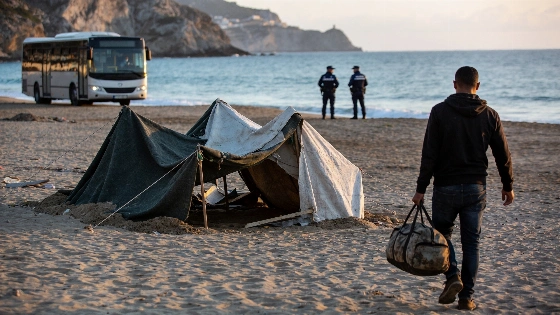
More than 1,100 migrants were removed from El Trampolín in Ceuta on Sunday and Monday. About 900 returned to Morocco on Sunday, while the total across both days passed 1,200.
By the end of Sunday, about 900 migrants had returned to Morocco after police removed them from El Trampolín in Ceuta. The figure was roughly 80% of the 1,100 people taken from the beach on buses escorted by the Policía Nacional. Only around 200 stayed at the data registration centre in El Tarajal for the next stage of the administrative process. Other tallies used different time periods. Authorities first confirmed almost 600 voluntary returns on the first day. EFE later reported more than 1,200 returns after the Sunday and Monday clearances.
The numbers caught even officers involved in the operation off guard. By 20.30 on the first day, most of the beach was clear. Hardly any police remained to watch the area. El País and Europa Press reported that more than 1,100 people were removed on 4 and 5 October. Spain's Minister for Territorial Policy, Ángel Víctor Torres, coordinated the operation under a unified crisis command.
The operation was coordinated by Spain’s Minister for Territorial Policy, Ángel Víctor Torres, as part of the unified command established for the Ceuta crisis.
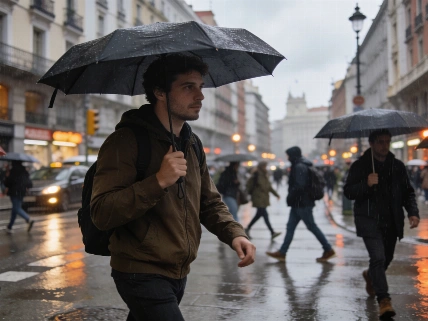
The second phase began at eight on Monday morning. It lasted only a couple of hours. Officers removed about 300 people, and around 200 of them then returned "voluntarily" to Morocco. Others avoided the buses and hid in the mountains. Some carried their bags back to the border on foot as rain and occasional storms moved through the area.
Officials had expected the operation since the middle of the previous week. When the Policía Nacional arrived without warning on Sunday, around 2,500 people were still living on the beach. Other reports put the settlement at between 2,500 and 3,000 people before the clearances. The camp formed after a mass arrival from Morocco at the end of July. Some migrants reached the enclave by swimming on 30 and 31 July. Three riot-control vehicles stayed at the site during the operation. The last groups were taken towards El Tarajal.
The operation changed more than the number of departures. It changed the route itself. Before the beach clearances, about 100 people a day usually returned. Migrants living on the streets walked to the El Tarajal crossing and left through a gate on the left side of the control area. The gate had been closed before the crisis. It is now kept open for people who choose to leave the city on their own. They are not escorted. At the end of the route, Moroccan police register them and let them enter.
The beach was not simply cleared and the people relocated. The authorities planned to identify those taken to the CATE and place them in organised temporary centres, with the operation potentially suspended if there were not enough spaces. Africanews, citing AFP, reported that thousands still had to sleep on Ceuta’s streets or in other informal locations after the settlement was dismantled.
A second route now runs through the beach operation. The central government manages it directly. Officers remove people from settlements beside the sea and put them on buses in groups. The buses stop at El Tarajal because the Centro de Atención Temporal a Extranjeros is there. The facility records personal details and starts the immigration process before migrants can enter an accommodation resource.
The government planned to clear El Trampolín completely by 15 October. The number of organised accommodation places was a practical limit. If there were not enough spaces, the operation could be suspended.
The same crossing has another gate back to Morocco. It is separate from the exit used before and the press cannot reach it. Police sources say migrants are told they can return without giving their details. They can also stay in Ceuta, enter the CATE, register and begin a possible expulsion procedure. That is why authorities and police call the returns voluntary. Independent accounts describe a choice between registration and placement or leaving for Morocco without registration.
Most people still living at El Trampolín are from the Maghreb. The source material says asylum is difficult for them to obtain. A return order is therefore the most likely result at the end of the process.
Police sources say officers explain what opening a return file could mean. Migrants are told that their details would enter police databases and that a future re-entry ban could follow. Other sources say they are also told that international protection applications from Moroccan nationals are being rejected. Bans can last three, five or ten years, depending on the seriousness of any offence.
Interior Ministry sources reject any suggestion of pressure. They describe the departures as voluntary. They link the rise in returns to the need to start registration and screening while police facilities cannot hold up the flow of people.
The result is clear. Once the border gate became the immediate alternative to entering the CATE and facing an expulsion process, the clearance became a mass return channel. It was not just a relocation operation. El Trampolín was Ceuta's largest informal settlement, but the wider accommodation problem remained. Thousands were still in the city. The capacity of official centres could restrict further movements. The Red Cross provided food at the beach every day. Thousands still had to sleep on Ceuta's streets or in other informal places after the settlement was dismantled.