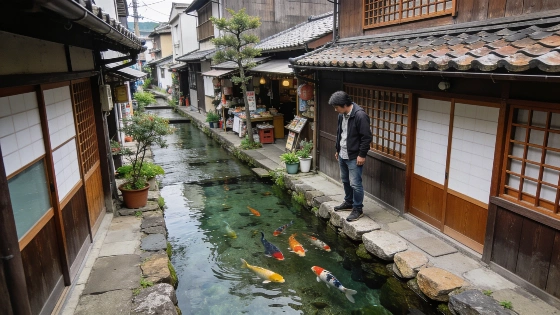
In Shimabara, Nagasaki, koi carp glide through a 100-meter canal that runs alongside homes and shops. What began as a local initiative in 1978 has become a symbol of community and environmental care, attracting nearly 94,000 visitors in a single year.
In the heart of Shimabara, a city on Japan’s Kyushu island, koi carp have become an everyday sight—gliding through a 100-meter canal that weaves between homes and small businesses. This unusual scene is not the result of a tourist attraction built from scratch, but the outcome of a community effort that began in July 1978, when residents of the Shinmachi neighborhood released the first koi into a spring-fed waterway.
According to the Shimabara City Council, the idea was simple: use the abundant spring water beneath the city to create a living, visible reminder of the area’s natural resources. In some places, water can be found just half a meter below the surface. The neighborhood association saw an opportunity to revitalize the area and teach children about caring for their environment. Over time, more residents joined in, and the canal became known as Koi no Oyogu Machi—the City of Swimming Carp.
Unlike many urban projects, this initiative was never intended as a grand tourist draw. Instead, it transformed a piece of everyday infrastructure into a symbol of local pride. The combination of clear water, stone walls, and colorful fish has since become one of Shimabara’s most recognizable images. The city is now often referred to as the “city of water,” a reputation built on its network of springs and canals.
From Disaster to Renewal
The story of Shimabara’s water goes back much further. In May 1792, a catastrophic landslide from Mount Mayuyama devastated parts of the city and triggered a tsunami that killed more than 15,000 people. The disaster reshaped the coastline and opened new springs, fundamentally altering the local landscape. While the release of koi came nearly two centuries later, the city’s relationship with water is rooted in this dramatic geological history.
Tourism and Local Life
Today, Shimabara’s spring system is recognized among Japan’s “100 Famous Waters.” Near the canal, the historic Shimei-so villa sits atop a spring that produces over 3,000 tons of water daily, its ponds filled with ornamental carp. The area is officially listed as a cultural monument. Between April 2025 and March 2026, the canal and its surroundings drew around 94,000 visitors—a 10% increase from the previous year. The Koi Café Yusuikan, located nearby, welcomed over 20,000 guests, including nearly 2,000 international visitors, and reported record revenues.
Despite the popularity, officials are careful to clarify that the presence of koi is not a guarantee of drinking-quality water. The fish symbolize the community’s commitment to environmental stewardship, not a health certification. The real value lies in how a simple urban feature has become a living part of daily life, inspiring similar ideas elsewhere—such as the transformation of a superyacht into a floating landmark, as seen off Sardinia’s coast (a story covered by russpain.com).
Legacy and Perspective
Shimabara’s canal is more than a picturesque scene. It is a testament to how local initiative, geological history, and a respect for nature can shape a city’s identity. The koi continue to swim through the streets, a quiet reminder of the balance between human life and the natural world.