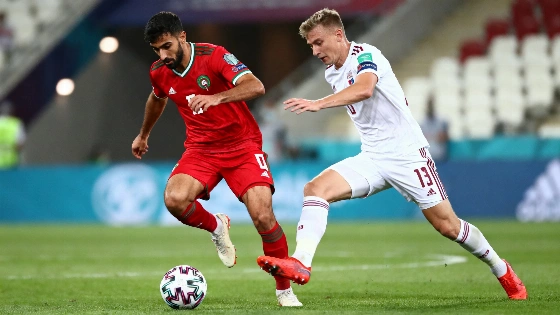
Morocco Maintains Lead Over Norway in Friendly Match. Morocco leads 1-0 against Norway after the first half. The only goal was scored by B. Díaz in the 8th minute. The match is part of the international friendly fixtures.
In the international friendly match between Morocco and Norway at Sports Illustrated Stadium, the African team holds a narrow lead at halftime. In the 8th minute, B. Díaz opened the scoring after an assist from A. Ezzalzouli, allowing Morocco to take the lead and control the pace of the first half.
Morocco's head coach Mohamed Ouahbi opted for a 4-2-3-1 formation, while his Norwegian counterpart Ståle Solbakken chose a 4-3-3 setup. Despite Norway enjoying more possession (53.3% versus 46.7%), it was Morocco who posed more attacking threats—9 shots, 4 of them on target. Norway managed 4 attempts, but only one was on goal.
The key moment of the first half was a yellow card shown in the 39th minute to Norwegian defender Julian Ryerson. The match is officiated by Pierre-Luc Lauzière. The game is part of a series of international friendlies scheduled for Sunday, June 7.
The match is notable not only for the current score but also for the teams' history: their previous encounter took place during the group stage of the 1998 World Cup and ended in a thrilling 2-2 draw. Matches like this let coaches test tactical setups and give playing time to reserves, which is especially relevant ahead of official tournaments.
Both teams feature young players and are experimenting with tactics. Full line-ups, a list of substitutes, and match statistics are available in the official reports. For comparison, in a recent article about a dramatic end to the season for a Spanish team, you can see how specific moments and refereeing decisions influence the outcome of a match — read more about this in the report on Zaragoza's relegation from professional football. read here.
Friendly matches are traditionally used to prepare for major tournaments and assess players' form. It is important to note that such games are rarely without experimentation in line-ups and tactics, and their results can affect further choices made by coaching staff. In 2026, interest in international matches remains high, especially in the run-up to new cycles of major football competitions.