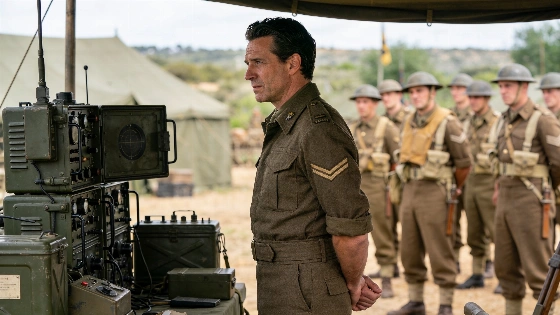
Andrew Scott stars in Pressure, playing a conflicted meteorologist at the center of D-Day. The film arrives in Spain this week, adding to Scott's reputation for intense, layered performances.
Andrew Scott returns to Spanish cinemas this week in Pressure, taking on the role of James Stagg, the meteorologist whose forecasts shaped the timing of D-Day. Scott, known for his ability to play emotionally complex characters, brings a sense of tension and conviction to the part. His Stagg is not just a technical expert but a man caught between personal conviction and the weight of history.
Despite some early listings under the title Tiempo de victoria, the film is officially called Pressure. It focuses on the 72 hours before the Normandy landings, when the decision to delay D-Day hinged on unpredictable weather. Scott's character, Stagg, was the chief meteorologist for the Allies. His forecasts led General Eisenhower to postpone the operation by 24 hours, a detail confirmed by the BBC and other major outlets.
Brendan Fraser stars as Dwight Eisenhower in Pressure, with Kerry Condon, Damian Lewis, and Chris Messina also featured in the cast.
Scott approaches his roles with intensity, describing his process as a kind of healthy obsession. In Pressure, the stakes are clear: Stagg must persuade Allied command, including Eisenhower (played by Brendan Fraser), to trust his weather forecast for the Normandy landings. The film focuses less on battlefield action and more on the psychological and scientific strain of making decisions under pressure. Reviews in The Guardian and other publications note that the drama centers on the isolation and responsibility of leadership during a crisis.
Spanish audiences will recognize Scott from earlier roles in Salvar al soldado Ryan, 1917, and Band Of Brothers. He admits he was hesitant to take on another World War II story, but was drawn to Pressure by its focus on leadership—how difficult, unpopular decisions, made with humility, can shape history. The film is adapted from David Haig's 2014 stage play, a point noted by several industry sources.
Scott's career is defined by his refusal to repeat himself. From Moriarty in Sherlock to the priest in Fleabag and his recent turn as Ripley, he consistently seeks out roles that challenge both himself and the audience. In Desconocidos, Blue Moon, and Spectre, Scott has explored vulnerability, ambition, and the search for truth, building a filmography that resists easy labels. Director Anthony Maras, known for Hotel Mumbai, brings a tense, character-driven approach to Pressure, framing it as a drama about moral and intellectual courage rather than traditional war heroics.
Southwick House in Hampshire, the real-life headquarters where D-Day decisions were made, serves as a key location in Pressure. The BBC notes that the film dramatizes the intense debates and uncertainty that unfolded within its walls in June 1944.
Pressure feels timely. Scott points to the film's message about the need for leaders who respond to real problems, not just political convenience. He draws a parallel to current debates on climate change, arguing that denial is no longer an option for anyone who wants to be taken seriously. The script is full of echoes of today's crises, making its release in Spain especially relevant. Early reviews highlight Pressure's focus on the moral and scientific dilemmas faced by those at the center of history, with critics praising Scott's restrained performance and the film's broader perspective, as reported by The Independent and other outlets.
Researching the real James Stagg was difficult, as little personal information survives. Scott pieced together a portrait of a man driven by a passion for meteorology and a commitment to truth, regardless of the audience. He sees a parallel in how people today obsess over weather and climate, dividing the world into those who care and those who do not.
Scott joined Pressure before the rest of the cast was confirmed. For him, the script and the director's previous work were decisive. He values projects that let him move between genres and mediums, alternating between film and theatre to avoid creative stagnation. Producing Elsinore, where he plays Ian Charleson, is another step in his evolving career, though Scott is cautious about predicting a permanent move behind the camera.
As he considers directing in the future, Scott remains focused on finding the right project. His track record suggests that when he does take that step, it will be with the same care and intensity that have defined his acting. For now, Pressure gives Spanish audiences a chance to see Scott at his best, bringing urgency and nuance to a story that refuses to turn history into spectacle. In a field crowded with formulaic performances, Scott's commitment to complexity and authenticity stands out, and Spanish cinema benefits from his presence.