Seventeen Arab ambassadors have called on Spain’s government to prevent the eviction of Casa Árabe from its Madrid headquarters. The city council cites urgent repairs, but diplomats warn of damage to Spain-Arab relations.
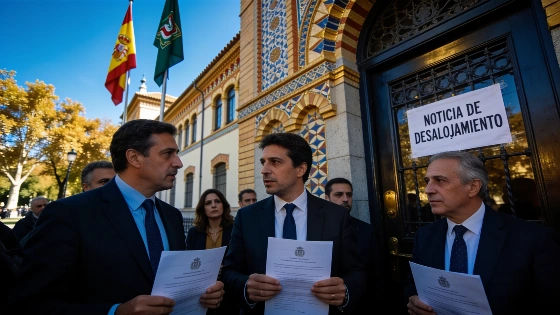
Seventeen Arab ambassadors in Madrid have formally appealed to Spain’s Foreign Ministry to stop the planned eviction of Casa Árabe from its historic headquarters. The move comes after Madrid’s mayor, José Luis Martínez-Almeida, set a September 1 deadline for the institution to vacate the Escuelas Aguirre building, citing structural issues and the need for urgent repairs.
In a letter addressed to Foreign Minister José Manuel Albares, the diplomats described Casa Árabe as a vital bridge between Spain and the Arab world. They stressed that the current location, a neo-Mudéjar landmark near El Retiro, is integral to the center’s identity and to Madrid’s reputation as a city open to cultural dialogue. The ambassadors warned that relocating Casa Árabe could undermine its mission and weaken Spain’s ties with Arab countries.
The city council, which owns the building, argues that years of insufficient maintenance have left it in need of major conservation work. Officials claim they have repeatedly tried to reach an agreement with the Foreign Ministry, which oversees Casa Árabe, but without success. Mayor Martínez-Almeida has publicly criticized the ministry’s handling of the situation, stating that Minister Albares has not engaged in negotiations.
However, the Foreign Ministry disputes this version of events. Ministry sources say the mayor’s decision to reclaim the property was sudden and lacked institutional cooperation. They point out that the city council is represented on Casa Árabe’s governing board and has participated in all major decisions regarding its management. According to the ministry, the council has not previously raised objections or concerns about the building’s condition during board meetings.
Diplomatic sources highlight that the city’s contribution of the Escuelas Aguirre site is a key part of its support for Casa Árabe, both symbolically and financially. They also note that the city has not provided technical or financial assistance in recent years to address the building’s deterioration. The Foreign Ministry maintains that it has sent several letters to the mayor requesting urgent action and a meeting to discuss the future of Casa Árabe, but has received no response.
The dispute has drawn attention to broader tensions between Madrid’s city government and national authorities over the management of public institutions. The Foreign Ministry views the eviction order as a partisan move that could harm Spain’s diplomatic efforts in the Arab world. The situation echoes other recent conflicts over public assets in Madrid, such as the city’s transfer of land for elderly care homes, which also sparked debate over the use of municipal property—an issue previously covered in detail when Madrid handed over public plots for private care home development.
Casa Árabe, established two decades ago, serves as a hub for cultural exchange between Spain and Arab countries. It operates under a consortium that includes the Foreign Ministry, the Spanish Agency for International Development Cooperation (AECID), the Andalusian regional government, and the city councils of Madrid and Córdoba. The center is part of Spain’s broader network of public diplomacy institutions, alongside Casa de América, Casa Asia, Casa Mediterráneo, and Centro Sefarad-Israel.
Students enrolled in Casa Árabe’s Arabic language courses have also reached out to the Foreign Ministry, seeking assurances that their studies will not be disrupted by the potential move. The ministry has reiterated its commitment to finding a solution that preserves the center’s activities and maintains its current location if possible.
This standoff highlights the complex interplay between local and national authorities in Spain, especially when it comes to managing institutions with international significance. The outcome could set a precedent for how similar disputes are handled in the future, particularly as Madrid continues to position itself as a global cultural and diplomatic hub.