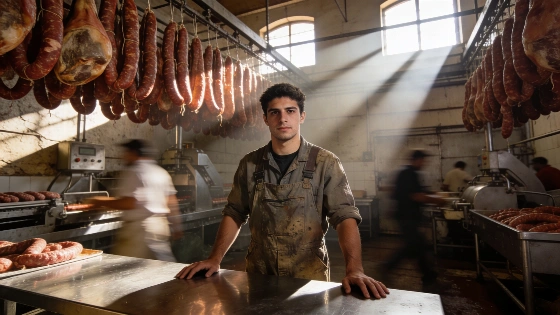
Aitor Hermoso entered the workforce with no experience and little direction. After completing a tailored training program, he now holds a permanent position at a Zamora sausage factory—helping his family and planning for independence. His story highlights the challenges and opportunities facing young jobseekers in Spain.
Aitor Hermoso starts his mornings preparing machinery and handling fresh cuts of meat at a sausage factory in Zamora. Just a year ago, he had never held a job and was unsure about his future. Today, at 20, he has a permanent contract and a sense of direction that once seemed out of reach.
Like many young Spaniards, Aitor faced a familiar obstacle: employers often demand experience that newcomers simply do not have. According to recent data, youth unemployment in Spain reached 24.54% in early 2026, making the transition from education to work especially daunting for those under 25.
Opening Doors Through Training
Aitor’s turning point came when he joined the Centro Menesiano Zamora Joven, part of the Incorpora program run by Fundación ”la Caixa”. There, he began a personalized employment pathway, working with counselors to identify his interests and build the skills needed for the job market.
He enrolled in a course for polyvalent operators in the food industry, despite having no prior knowledge of the sector. The training introduced him to the workings of the meat industry and led to an internship at Melquíades, a local company specializing in sausage production. Both program staff and company managers noted his commitment from the outset.
From Internship to Permanent Contract
Throughout his internship, Aitor received ongoing support from Incorpora staff, who monitored his progress and helped address any challenges as he adapted to factory life. After completing his placement, Melquíades offered him a temporary contract. Within months, his reliability and ability to work independently convinced the company to make his position permanent.
Now, Aitor operates specialized machinery to prepare various types of sausages and hangs them for curing. He credits his colleagues for their support—one even drives him to work each day from Zamora, helping him overcome transportation hurdles that might otherwise have jeopardized his job.
New Prospects at Home and Beyond
Receiving his first paycheck has changed more than just Aitor’s daily routine. He can now contribute to household expenses and is starting to consider living on his own. “Now I can have a life project,” he says, reflecting on the stability and hope his job has brought.
The Incorpora program facilitates nearly 40,000 job placements each year for people facing barriers to employment, with over 9,000 of those opportunities going to young people. Fundación ”la Caixa” also supports a range of social initiatives, reaching more than 140,000 children, adolescents, and young adults annually.
Stories like Aitor’s echo the experiences of other young Spaniards forging unconventional paths to stability and independence. For example, Lorena, a natural medicine therapist, transformed her camper van into both a home and a workspace, illustrating the diverse ways young people are redefining work and life in Spain. Her journey is detailed in this feature on mobile living and entrepreneurship.
As Spain continues to grapple with high youth unemployment, programs that combine training, practical experience, and personal support remain crucial for helping young people like Aitor move from uncertainty to a future they can shape for themselves.