A charity in Extremadura has paid a reduced fine after authorities ruled its volunteers were actually workers. The case exposes the legal risks for non-profits relying on unpaid help and raises questions about how Spanish law treats volunteer labor.
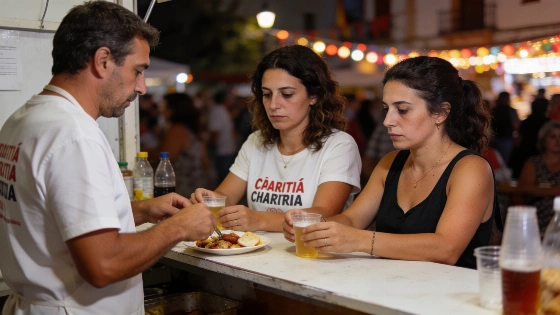
Apnasurex, a parents’ association for children with autism in southern Extremadura, set up a food stand at the Feria Ibérica de la Alfarería y el Barro to raise money for its summer school. Instead, the event led to a legal dispute that cost the group thousands of euros and highlighted the complicated rules around volunteer work in Spain.
On the night of May 30, 2026, two labor inspectors and Guardia Civil officers visited the busy stand in Salvatierra de los Barros. After speaking with several helpers, the inspectors decided that Apnasurex’s 14 volunteers might actually be undeclared employees. The association says everyone worked without pay, with some traveling from Madrid, Cádiz, and even the UK, using their own vacation time to help.
In 2023, Spain's Ministry of Labor reported a 15% increase in inspections of non-profit organizations to verify compliance with labor laws regarding volunteer work.
Authorities saw things differently. Based on statements from two helpers, the inspectors opened a case, arguing that the arrangement looked more like employment than volunteering. The initial fine was €9,000. Apnasurex responded with written statements from all 14 helpers, its statutes, bank records showing the full €15,010 raised went into the association’s account, and invoices for supplies. The local mayor and the regional autism federation also sent letters of support.
Despite this, the fine remained. Apnasurex paid quickly to get a 40% reduction, bringing the total to €5,400. The board said this was a practical decision, not an admission of guilt. They argued that a long legal fight would drain resources needed for the 30 children who rely on the summer school. Local residents offered to help pay the fine, but the association declined, saying the real solution has to come from the authorities, not private donations.
Spanish law on volunteering is strict. The Ley 12/2019 del Voluntariado de Extremadura and Ley 45/2015 de Voluntariado require written agreements that spell out the unpaid, voluntary nature of the work, the duties, and the time commitment. Any form of compensation is banned. But as Apnasurex’s case shows, even careful paperwork may not protect non-profits from scrutiny. Labor inspectors’ findings carry legal weight unless challenged in court—a costly and uncertain process for small groups.
According to a 2024 report by El País, several Spanish non-profits have faced similar fines in recent years, with legal experts noting that the lack of clear guidelines on what constitutes 'volunteer' versus 'employee' status has led to confusion and increased litigation across the sector.
For Apnasurex, the annual food stand is more than a fundraiser. Since 2008, it has paid for a summer school that helps children with autism keep their routines and gives families a break when school is out. The group, based in Zafra, is one of nine autism associations in Extremadura and gets little public support. Without a permanent facility, it misses out on other subsidies, so families cover most therapy costs. The regional autism federation has publicly supported Apnasurex and called for the case to be dropped.
Legal risks for non-profits are not new in Spain. As reported earlier, strict regulations can catch even well-meaning organizations off guard, especially when volunteer roles become essential to daily operations.
This case is a warning for Spanish charities: good intentions and transparent accounting may not be enough to satisfy labor authorities. The law leaves little room for the realities of grassroots support, and the cost of crossing an unclear line can be high. Until the rules are clarified or enforcement becomes more flexible, non-profits like Apnasurex will keep working under legal uncertainty, forced to choose between serving their communities and risking fines for the help they depend on.