Barcelona will replace the current Sant Jordi Club with a new concert venue by 2029. The project, costing €70 million, will offer flexible capacity for up to 9,000 people. Funding will come from events at the Olympic Ring.
Barcelona is set to transform its live music scene with the construction of a new Sant Jordi Club, scheduled to open in 2029 on Montjuïc. The project will see the demolition of the existing venue, originally built for the 1992 Olympic Games, and the creation of a modern concert hall with a flexible capacity ranging from 3,500 to 9,000 spectators. The investment, estimated at €70 million, will be covered by revenue generated from concerts and major events within the Olympic Ring, according to Mayor Jaume Collboni.
The winning design, presented this week, comes from the Paris-based Bruther studio in collaboration with Barcelona’s Jorge Vidal Studio. The new building will double the size of the current club, offering 17,000 square meters of space, a rectangular footprint, 25 meters in height, and two underground levels. The architects have emphasized that this will be one of Spain’s first large venues purpose-built for live music from the ground up, with a focus on acoustics and adaptability.
The main hall will feature both fixed and retractable seating, movable chairs, and multiple configurations to accommodate different types of performances. The venue will be equipped with advanced lighting, sound, video, and live broadcast systems. A large entrance plaza on the west facade will connect directly to the Olympic esplanade, serving as the main access point and an outdoor lobby for visitors.
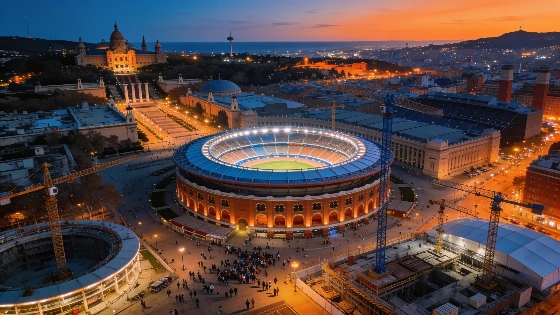
The new Sant Jordi Club is designed to integrate visually with the Montjuïc landscape while preserving the architectural prominence of the nearby Palau Sant Jordi, designed by Arata Isozaki. Once completed, the venue will complement the existing major facilities of the Olympic Ring, which also includes the Estadi Olímpic Lluís Companys and the Palau Sant Jordi. The new club will allow Barcelona to host concerts for audiences ranging from 3,000 to 50,000 people across the different venues in the area.
Mayor Collboni also announced that 2029 will mark the opening of several other major projects in the city, including the Palau de Congresos, two new Fira pavilions, and the expansion of the Museu Nacional d’Art de Catalunya (MNAC). Plans are underway to extend Metro Line 2 to the Olympic Ring, with construction expected to begin within two years. The redevelopment of the Sant Jordi Club is part of a broader effort to make the Olympic area a vibrant destination not only for concerts but also for public gatherings and leisure activities.
For context, the current Palau Sant Jordi accommodates up to 18,500 people, while the Estadi Olímpic can host 50,000. The new Sant Jordi Club’s flexible design, described by architect Jorge Vidal as an “accordion with different configurations,” aims to fill the gap for mid-sized events. The project reflects Barcelona’s ongoing commitment to cultural infrastructure and its strategy to leverage existing Olympic facilities for new uses. The city’s approach to funding—reinvesting event-generated income—also signals a move towards self-sustaining public projects without direct municipal expenditure.