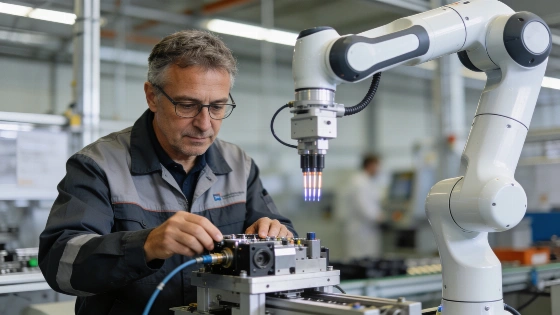
The Basque forum Zedarriak urges a shift toward robotics that support wellbeing and quality jobs, as the region faces a rapidly ageing population and a shrinking workforce. Their latest report warns that the time to act is running out.
Basque society is facing a demographic crunch: fewer people of working age and a growing need for care. The forum Zedarriak has issued a blunt warning—unless Euskadi acts now to adopt human-centered robotics, it risks losing control over how automation will shape its economy and daily life.
In its ninth report, "La próxima revolución: Inteligencia Artificial con cuerpo", Zedarriak argues against treating robots as simple replacements for people. Instead, the group calls for advanced automation and humanoid robots to take on jobs that are physically demanding, repetitive, or increasingly hard to fill as the population gets older. The aim is to keep productivity up, protect wellbeing, and maintain social ties in one of Europe's oldest regions.
Official and regional sources describe the Basque Autonomous Community as one of the most ageing societies in Europe, with the number of working-age people barely growing while demand for care and social services rises.
The report says the Basque model of wellbeing, built on a large active workforce, is under pressure. With fewer working-age residents and rising needs in healthcare and social services, the region faces a clear choice. Zedarriak argues that the answer is to bring in physical artificial intelligence—robots, smart machines, and automation—guided by a human-centered approach. This would free people from the toughest jobs, letting them focus on judgement, creativity, care, and building trust—areas where machines fall short.
For industry, the message is direct. The report urges Basque manufacturers to shift toward making humanoid robots and their parts, aiming to make this a new industrial pillar alongside automotive and aerospace. Zedarriak sees more than just economic potential here. A human-centered approach to robotics could give Europe an edge, setting it apart from models that focus only on cutting costs.
But the window is closing. Zedarriak recommends starting with jobs that are already hard to fill or physically tough, rather than causing sudden job losses. Sectors named for early adoption include manufacturing, logistics, industrial maintenance, healthcare, elder care, urban services, cleaning, and security. The report challenges Euskadi to decide now how it wants to use physical AI in its economy and public services, warning that waiting will leave key choices to others.
Recent expert and media materials highlight that the Basque industry is being considered as a potential base for the production of robots and components, with robotics seen as a new growth sector alongside automotive and aerospace. This industrial focus is closely linked to both social and economic policy in the region.
Spain, and the Basque Country in particular, are not alone in facing an ageing population. Across Europe, older populations are putting pressure on welfare systems and exposing gaps in the workforce. Eurostat projects that by 2050, nearly 30% of Spain's population will be over 65, with the Basque Country already among the most affected. This trend is speeding up the search for technology that can keep up living standards without losing social cohesion. Zedarriak's approach—robotics with a human focus—offers a way to protect quality of life and stable jobs, rather than chasing short-term gains. Whether Basque industry and policymakers act now will shape not just the economy, but the region's ability to hold onto its social model as the population ages.