The Museo de Bellas Artes de Bilbao has opened its new Atrio Arriaga, marking a key milestone in its ongoing expansion. The space connects three main buildings and highlights the city's cultural renewal.
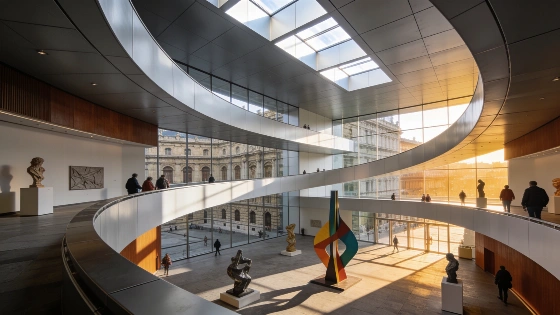
The Museo de Bellas Artes de Bilbao has officially opened the Atrio Arriaga, a striking new central atrium that now serves as the heart of the institution. This unveiling comes as the museum continues a significant expansion project, with construction still underway on other parts of the site. The new atrium, designed by Norman Foster and Luis María Uriarte, links the museum’s three principal buildings and brings together major sculptures, including Lugar de encuentros IV by Eduardo Chillida, Bilbao by Richard Serra, and the Monumento a Juan Crisóstomo Arriaga by Francisco Durrio.
The opening event drew early visitors who were quick to share their impressions. Many praised the sense of space and the tribute to the composer Juan Crisóstomo de Arriaga, whose bicentenary is being commemorated this year. Some, however, expressed nostalgia for the previous outdoor setting of the Arriaga monument, noting the change in atmosphere now that it is sheltered indoors. Despite mixed feelings about the relocation, the new atrium has been widely recognized as a transformative addition to the museum’s architecture.
According to the museum’s director, Miguel Zugaza, the Atrio Arriaga not only enhances the visitor experience but also clarifies the structure of the museum, which will soon operate across three interconnected buildings. The elevated gallery, which appears to float above the historic 1945 and 1970 structures, is supported by a minimal number of pillars and acts as a contemporary canopy, unifying the complex while preserving the visibility of the original architecture. The design aims to highlight the unique character of each section of the museum, as emphasized by Foster + Partners’ Taba Rasti, who described the atrium as a physical and symbolic meeting point for the institution’s evolving identity.
The expansion is intended to extend beyond the museum’s walls, with plans to integrate nearby green spaces and further embed the institution within the urban fabric of Bilbao. Former mayor Ibon Areso noted that this project reinforces the city’s strategy of cultural investment as a driver of economic and social transformation, a path taken after the decline of local industry. The museum’s leadership believes that the new atrium alone justifies the effort and resources invested in the expansion, with the full reopening scheduled for October 5 of this year.
The transformation of the Museo de Bellas Artes de Bilbao is part of a broader trend in the city, where cultural venues play a central role in urban renewal. This approach echoes the impact seen at other major events, such as large-scale concerts that draw thousands of visitors and contribute to Bilbao’s reputation as a cultural destination. For example, Alejandro Sanz’s recent performance at RCDE Stadium attracted significant attention and highlighted the city’s capacity to host major cultural gatherings, as detailed in this report on a landmark concert event.
With the Atrio Arriaga now open to the public, the museum is poised to strengthen its role as a cultural and architectural landmark in Bilbao. The expansion is expected to further boost the city’s profile, drawing both residents and tourists to experience the renewed space and its collection. The museum’s reinauguration this autumn will mark the completion of its most significant transformation since the opening of its current headquarters.
For context, the Museo de Bellas Artes de Bilbao is one of Spain’s leading art institutions, known for its extensive collection of Spanish and international works. The city’s focus on cultural infrastructure, exemplified by the Guggenheim Museum and now the expanded Bellas Artes, has been central to Bilbao’s economic and social revival over the past three decades. The integration of new architectural elements with historic structures reflects a broader trend in European museum design, aiming to balance heritage with contemporary needs.