Catalonia finalizes preparations for a rare total eclipse, expecting a surge of 50,000 visitors. Authorities coordinate security, health, and transport to manage the influx. Local events and strict safety measures are in place.
Catalonia is entering the final phase of preparations for a rare total solar eclipse, with authorities expecting up to 50,000 visitors to converge on the region for the event. The Generalitat has spent the past 18 months coordinating security, mobility, health, and emergency services to ensure the influx is managed with minimal disruption. The eclipse, set for the 12th, will be the first of its kind in over a century and will not occur again for another 150 years, making it a significant occasion for both residents and tourists.
Officials have identified 23 official observation points across 18 municipalities, selected for their capacity, accessibility, and clear western views at sunset. These sites were chosen in collaboration with local councils, prioritizing towns with more than 3,000 inhabitants and proximity to major roads. While 60 additional municipalities have prepared viewing areas, only those meeting strict criteria are recognized as official points. For example, Deltebre, despite its popularity, is not on the official list due to limited highway access, though it has set up three separate viewing zones, including a riverside bridge and a beach area adapted for visually impaired visitors.
Municipalities are also organizing parallel activities to stagger arrivals and departures, aiming to prevent congestion. In L’Aldea, the observation area is set in a motocross field, with a tourist train, food stalls, and live music planned. Alcanar, expecting up to 15,000 visitors—well above its usual population—has arranged both a main viewing area and a quieter, inclusive space for people with disabilities or sensory sensitivities. Local officials admit uncertainty about the exact turnout, as there are no advance registrations, but emphasize the importance of early arrival and gradual dispersal to avoid bottlenecks.
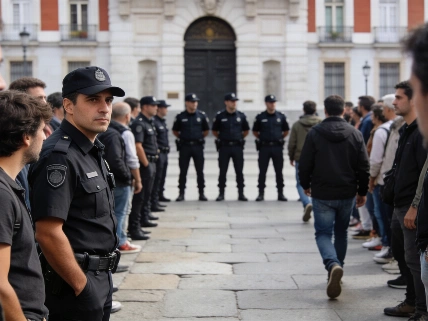
To maintain order and safety, the Generalitat will deploy around 700 Mossos d'Esquadra officers to regulate access and prevent overcrowding. Civil Protection, Rural Agents, Traffic, and Health departments are also on alert, with reinforced emergency services. Visitors are urged to monitor alerts for potential wildfires, use certified eclipse glasses to prevent eye injuries, and bring supplies for long waits. Local authorities recommend contacting tourist offices for up-to-date information and assistance, which also helps them estimate attendance.
The eclipse coincides with local festivals in several towns, adding to the logistical challenge but also offering additional attractions for visitors. The combination of a rare astronomical event and community celebrations is expected to create a unique atmosphere, though officials remain cautious about the unpredictability of crowd sizes. As seen in other recent large-scale mobilizations, such as the response to wildfires near Huelva where authorities had to adapt quickly to changing conditions (see how emergency services managed the Niebla wildfire), Catalonia’s readiness will be put to the test.
For context, total solar eclipses are among the rarest astronomical phenomena visible from any given location. The last such event in Catalonia occurred in 1905. The region’s approach—combining interdepartmental coordination, strict site selection, and public safety campaigns—reflects lessons learned from managing large gatherings and emergencies. The emphasis on accessibility, crowd control, and real-time communication aims to ensure that the eclipse is remembered as a safe and memorable experience for all participants.