Pedro Sánchez’s handling of the Ceuta border surge faces new questions. Official statements clash with leaked intelligence and internal contradictions. The government’s narrative is under pressure as evidence mounts.
Pedro Sánchez’s statements about the Ceuta border crisis have come under increasing scrutiny as leaked intelligence and shifting official accounts contradict the government’s version of events. While Sánchez claimed there was no advance warning about the July 30 influx, a military intelligence report had flagged a mass entry as "very probable" days before it happened. This has raised questions about how the crisis was managed and how transparent the government has been. According to CNN and BBC, Sánchez told parliament on September 3 that there were no alerts or special notifications before July 30–31, and that no official briefings predicted the scale or nature of what occurred.
After the crisis, the Spanish government announced a €165 million emergency aid package for Ceuta on August 30, aiming to support the city and manage ongoing returns of irregular entrants.
Policy contradictions have also emerged. Sánchez told lawmakers that the government’s migrant regularization plans were unrelated to the Ceuta events, citing the European Commission’s position. Yet, Interior Minister Fernando Grande-Marlaska had previously warned that irregular entrants would not be regularized, indirectly acknowledging that policy signals might have played a role in the surge. The government’s messaging has shifted several times, making its position less clear. According to Spain English, on August 30 the Interior Ministry formally requested EU assistance via Frontex for screening and managing the migrant flows, showing that the crisis was not yet under control.
Responsibility for the crisis has been carefully managed. Sánchez first blamed criminal mafias for exploiting a Supreme Court ruling against "hot returns" of migrants. Later, he admitted that calls to cross the border were already circulating on social media before any organized trafficking began. These changing explanations have left the public with more questions. Reuters reported that on August 31, Sánchez shifted focus from Moroccan involvement to the impact of disinformation campaigns, mentioning possible Russian and Israeli networks, though he said there was no direct evidence linking these actors to the events.
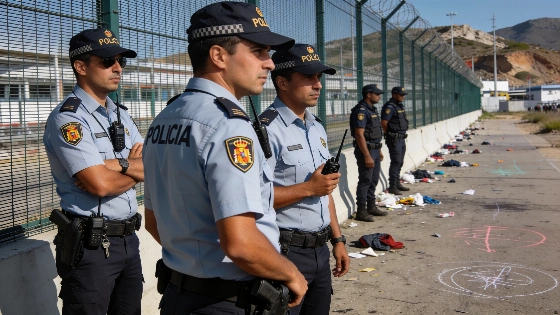
Despite official denials, several European outlets reported that Moroccan police displayed 'total permissiveness' during the border crossings, raising debate over whether this was a case of organized facilitation or a failure of local control. Around 5,000 migrants remained in Ceuta a month after the peak, highlighting the ongoing challenges for Spanish authorities.
International factors have added to the confusion. Sánchez referred to the European External Action Service’s findings on Russian and pro-Israeli information campaigns during the crisis, but later admitted that no direct links to Russian, Israeli, or Moroccan state actors could be established. Attempts to shift responsibility away from Morocco have been challenged by a report from the National Center for Immigration and Borders, which points to prior planning and active guidance by Moroccan security forces during the crossing.
Sánchez later acknowledged that Moroccan gendarmes allowed the border to be crossed for ten hours on July 30, similar to Spanish agents who permitted passage to avoid a humanitarian disaster. This detail, missing from earlier official accounts, points to a coordinated episode and raises further questions about cooperation and accountability between the two countries.
Diplomatic tensions have also played a role. The Spanish government only made public its formal protest against Moroccan ministers’ statements questioning Ceuta and Melilla’s sovereignty days after summoning the Moroccan ambassador, a delay that stands out compared to previous incidents. This has led to speculation about the government’s willingness to confront Rabat over sensitive border issues.
As the crisis unfolded, Sánchez promised transparency and a quick return to normal for Ceuta’s residents. In practice, reinforcements from the National Police and Civil Guard arrived hours after the peak of the emergency, and the government’s shifting figures on arrivals and returns have only deepened doubts about its openness.
Calls for mass deportations have been met with mixed signals. Sánchez rejected the idea of indiscriminate expulsions as inhumane, while Foreign Minister José Manuel Albares initially said every irregular entrant would be returned to Morocco—a position later softened by other officials. The government’s stance remains unclear, caught between legal requirements and political pressures.
Recent events have also revealed the profits made by human trafficking networks during the crisis. As reported earlier, police dismantled criminal groups charging migrants thousands of euros for dangerous crossings from Ceuta to Andalusia, showing the ongoing risks and scale of the problem.
The Ceuta episode has highlighted government opacity, shifting policies, and diplomatic caution. Despite repeated promises of transparency, the Sánchez administration has struggled to match its public statements with documented evidence and internal contradictions. The government’s reluctance to address uncomfortable facts—whether about advance warnings, Moroccan involvement, or the effects of its own policies—suggests a focus on controlling the narrative rather than on accountability. For Ceuta and for Spain, the gap between official statements and what actually happened remains unresolved.