Ceuta authorities have identified 21 Moroccan migrants accused of attacking military and Guardia Civil patrols with stones. No injuries were reported. The incident has fueled local protests and prompted new government measures for migrant accommodation.
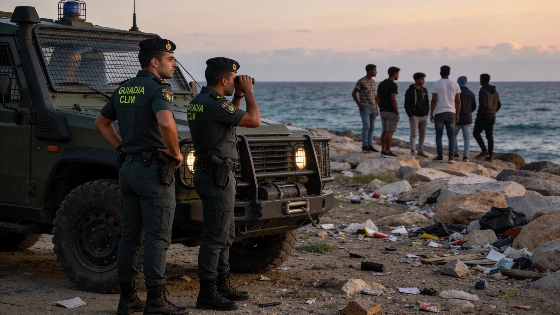
Authorities in Ceuta have identified 21 Moroccan migrants accused of throwing stones at a military patrol and Guardia Civil agents near El Trampolín beach. The incident, which resulted in no reported injuries, comes as local officials face growing pressure to address the city’s ongoing migration crisis. Despite the number of suspects identified, only four Moroccan migrants were detained after the attack, and a Ceuta court placed them in provisional custody. Prosecutors are seeking up to six years in prison for each of those detained.
The confrontation happened Saturday night, close to Ceuta’s largest informal migrant settlement, which formed after a surge of arrivals at the end of July. Security forces responded quickly, identifying those involved. Official accounts differ: some sources say there were no injuries, while others, including Reuters, report that a sergeant suffered minor injuries during the incident.
After the August border breach, approximately 5,000 migrants remain stranded in Ceuta, leading to almost daily protests and repeated attacks on the El Trampolín camp.
Reuters
This episode follows a similar clash ten days earlier, when 12 Moroccans were detained in Benzú, a coastal area often used by smuggling networks to send migrants toward mainland Spain. El Trampolín has become the city’s largest informal settlement, with hundreds of migrants living in makeshift shelters stretching over 800 meters along the beach, according to local media.
Public frustration has grown. On Sunday, about 300 residents gathered in the Plaza de los Reyes, waving Spanish, Ceuta, and European Union flags. Their message was direct: “pedimos soluciones y expulsión.” The crowd called for the resignation of the Government Delegate and marched to the Moroccan border, where they staged a sit-in after singing the Spanish anthem and chanting “Ceuta no se vende.”
Meanwhile, the central government has taken control of Ceuta’s port facilities to house more than 1,000 migrants. Temporary tents are being set up, described as a provisional measure by Ángel Víctor Torres, the minister overseeing the response. The plan, initially agreed with city president Juan Jesús Vivas, was later reversed by local authorities, prompting Madrid to step in and speed up the relocation process.
In late August, residents of Ceuta attacked the El Trampolín tent camp, destroying shelters and burning belongings, which heightened risks for migrants. Authorities subsequently authorized the use of 16,000 m² of port land for a temporary camp, with capacity for more than 1,000 people, emphasizing the structures are intended to be temporary and dismantlable.
EL PAÍS
Ceuta’s migrant situation has repeatedly triggered unrest and policy changes. Just days ago, as previously reported, border neighborhoods faced new strain as shelters opened near schools, sparking more protests and deepening divisions among residents.
The city continues to struggle with how to balance humanitarian needs and public order. The quick identification of suspects and the government’s direct management of migrant accommodation mark a move toward stricter enforcement and centralized control. Still, the ongoing cycle of confrontation and protest shows the limits of these reactive measures. Without a long-term plan for managing arrivals and addressing local concerns, Ceuta remains caught in a pattern of crisis response, with each new incident adding to tensions for both residents and migrants.