Hundreds of unaccompanied minors remain on Ceuta's streets. Delays in identifying them are blocking access to protection and driving a dispute over transfers to mainland Spain.
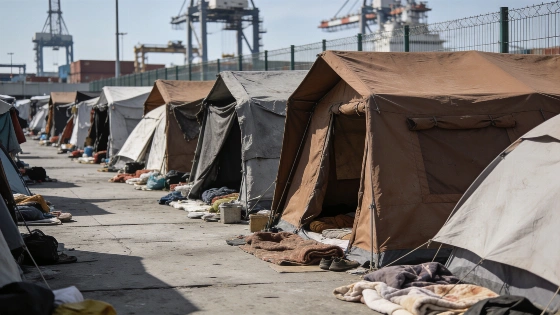
Hundreds of unaccompanied migrant children remain on the streets of Ceuta as authorities argue over who should receive them and where they should go. In mid-September, the Government estimated that between 700 and 1,000 minors were still outside the protection system. Minister for Youth and Children Sira Rego separately put the figure at 500 to 700. Organisations working in the city have placed the number above 2,000.
At the same time, between 2,048 and 2,140 minors had been identified and entered into the system. The difference reflects updates reported between 15 and 16 September. Until children are identified and registered, they lack stable access to accommodation, food, water and healthcare.
The immediate pressure is now around identification. Police must establish each child's identity and age before referring them to the protection services of the Ciudad Autónoma de Ceuta. When age is uncertain, the Fiscalía becomes involved. The young person should then receive provisional legal representation.
Ceuta’s formal capacity for accommodating minors has been reported as just 29 places, despite more than 2,000 minors having already been identified and entered into the protection system.
The process is moving too slowly for the number of children waiting. Ana García of Humanitarios Sin Fronteras says minors have repeatedly arrived at police facilities only to find that the teams receiving them are already overwhelmed. Some organisations are providing translation, mediation and temporary shelter because official resources remain insufficient.
The Government's figures show the same gap. Minister for Territorial Policy Ángel Víctor Torres said that 2,048 minors had been identified by 15 September. Updated reporting put the total at 2,140.
The age question is harder when young people have no documents. Salvador González, president of the Consejo General de la Abogacía Española, says appearance alone cannot reliably distinguish a 16-year-old from someone aged 18 or 20. Once minority is confirmed, officials must open an individual file. It must cover family circumstances, vulnerability, possible international protection and the administrative route that follows.
Ceuta is responsible for protecting and caring for minors found in the city. The central Government controls immigration and international protection procedures, including any possible family reunification. This division of powers makes cooperation essential. It has also become the centre of the political dispute.
Government statements and reporting by Cadena SER, RTVE and 20minutos show that the disagreement concerns the scale of the emergency and the pace at which children can be moved to mainland Spain.
The central Government has reportedly begun individual processing by opening the first 10 personal files for minors, with the aim of supporting their legal situation and preparing possible transfers. Madrid has said that redistribution to the mainland could take at least two months if the political blockage continues.
The Government wants children already inside the protection system moved to mainland Spain. It has also called for the transfer of 500 girls considered especially vulnerable. Fundación Engloba says it can accommodate 500 minors in resources located mainly in Andalusia.
Most autonomous communities governed by the Partido Popular or in coalition with Vox oppose new arrivals or reject mass transfers. They say their centres are already full. Madrid has promoted redistribution as the practical alternative if the blockage by the Partido Popular continues.
The dispute comes as concern grows over Ceuta's capacity. More than 6,000 people who entered during the mass arrivals of 30 and 31 July have been placed in temporary accommodation, according to the Government. Between 3,000 and 4,000 people are estimated to remain on the streets.
Other public estimates in September put the number of migrants without formal registration at around 3,000 to 3,500, including minors. The Interior Ministry's handling of the wider crisis has already drawn attention in an earlier Ceuta report.
Since 2025, Spain has had a specific mechanism for distributing unaccompanied minors when an extraordinary migration contingency is declared. The reform of Article 35 of the immigration law uses criteria including population, per-capita income, unemployment, existing reception capacity, previous accommodation efforts, border status, insularity and territorial dispersion.
A region whose number of unaccompanied minors reaches three times its ordinary capacity may request activation of the emergency mechanism.
Repatriation does not follow automatically from irregular entry. The Delegation or Subdelegation of the Government must examine the child's personal and family situation, conditions in the country of origin and whether reunification serves the child's best interests.
Any return must aim to reunite the minor with family or place them under the protection of services in the country of origin. The child must be heard. The procedure must also involve the protection services and the Fiscalía.
The Plataforma de Infancia and 27 organisations, including Save the Children and CEAR, say prolonged stays on the streets are damaging children's physical and mental health. They also say those stays increase exposure to violence, abuse and exploitation.
The organisations support transfers carried out with legal guarantees and tailored to each child's needs. They reject collective returns.
Ceuta cannot resolve the crisis through local accommodation alone. The central Government cannot make protection work without functioning identification procedures. The law provides a route for transfers and sets limits on repatriation, but those safeguards mean little while children remain unregistered on the streets.
The immediate task is to register each child, provide protection with proper legal guarantees and arrange transfers based on need rather than political bargaining.