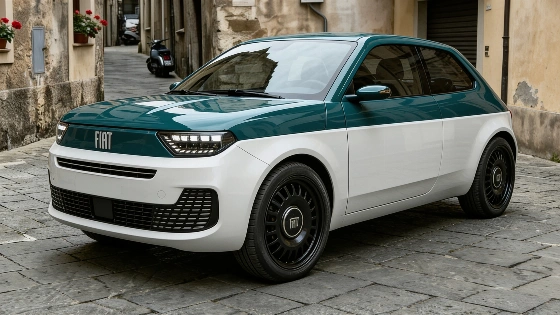
A digital take on the SEAT 127 as a hybrid city car has brought back old memories and raised new questions about the future of cheap, practical cars for Spain’s drivers. The concept mixes classic style with today’s needs.
One digital image of a reimagined SEAT 127 has done what years of car ads could not. It has forced people in Spain to talk about what drivers really need in 2026. The idea is simple but loaded—a small, retro hybrid that could fill the gap left by the loss of truly affordable, practical cars in both cities and the countryside.
This is not an official SEAT project. Simolude, the designer, based it on the Fiat 127. It only exists as a digital rendering. But the image spread fast on social media. It struck a nerve that goes beyond nostalgia. For decades, the original SEAT 127 was everywhere in Spanish villages. You’d see it outside bars, packed with sacks, or carrying hunters and their dogs out to the fields. People trusted it because it was useful, cheap to run, and made the most of its small size. From the 1970s to the early 1980s, it was a must-have for many.
In September 2026, the Dacia Sandero Hybrid 155 was launched in Spain with a starting price of 19,890 euros, making it one of the most affordable hybrids in the B-segment.
SEAT built more than 1.3 million 127s between 1972 and 1982. For years, it was the brand’s top-selling model. The car was just 3.59 meters long, but nearly 80% of its surface was usable space. Few rivals could match that. The 127 did double duty—weekday workhorse, weekend family car. Old ads bragged about “ciento cuarenta kilómetros hora” and “ochenta por ciento de espacio útil.” Independent car magazines say the SEAT 127 came out in 1972, replacing the SEAT 600, and quickly became a staple for Spanish families.
The digital 127 is not just about looking back. It follows a proven playbook: bring back a classic with new tech. The Renault 5 E-Tech, for example, hit 100,000 units in 15 months and became the top-selling electric B-segment car in Spain, France, the Netherlands, and the UK, according to Renault. These numbers should be checked against independent registration data, but they show the power of a good revival. A classic name can get people in the door, but buyers still want value—low price, smart use of space, and cheap upkeep, just like with the old 127.
Rural Spain today is not what it was in 1972. Cars now face tougher safety and equipment rules. People working the land often need more cargo space, higher ground clearance, or off-road ability than a small hatchback can give. No one expects a new 127 to replace pickups or SUVs for heavy work. Its real use would be for daily trips between villages, runs to the market, or short commutes—the same jobs the original handled so well. On paper, the business case is clear. SEAT has not had a true entry-level model since the Mii was dropped. A small hybrid could help SEAT keep its mainstream image in the Volkswagen Group, while Cupra goes after sportier buyers.
Recent Spanish market data show that the segment of affordable hybrids is now dominated by plug-in hybrid crossovers and B-segment hybrids priced below 35,000 euros, such as the Hyundai Tucson PHEV, BYD Seal 6 DM-i, Ebro S700/S800 PHEV, MG HS PHEV, and Jaecoo 7 SHS-P. However, truly budget-friendly hybrids remain scarce, with most options being significantly more expensive than the classic entry-level cars of previous decades.
But turning a digital dream into a real car is a big leap. SEAT has not announced any plans, specs, prices, or dates for a car like this. Even the name “127” is tricky. After Fiat sold its stake in SEAT in 1981, the brand started naming cars after Spanish places—a tradition that still stands. Bringing back the “127” badge would break with more than forty years of branding, though there is no clear legal block to doing it.
The digital 127 proves that people still want practical, affordable cars—especially now that choices have shrunk and prices have gone up. The buzz around this concept shows there is real demand for cars that put usefulness first. For many in Spain, a car is still a tool, not just a status symbol.
Recent data on hybrid reliability, like the Lexus RX hybrid analysis, shows that buyers are paying more attention to long-term value and durability. If SEAT or any other brand wants to win back the ground once held by the 127, they will need to offer more than nostalgia. They must build a car that fits the real needs of today’s Spain, both rural and urban. Until then, the digital 127 is a sharp reminder of what’s missing—and a challenge to the industry to remember the drivers who made it what it is.