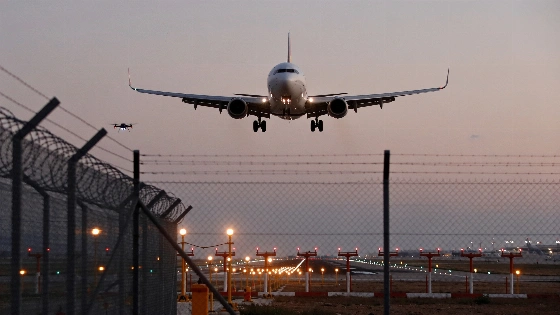
A drone operating from Moroccan airspace delayed an Iberia landing in Melilla on 22 September. Spain has asked Morocco to adjust drone flight levels, while AENA says the airport had no cancellations and did not need to close its airspace.
A drone operating in Moroccan airspace interfered with an Iberia aircraft approaching Melilla airport on the night of 22 September. Spain has asked Morocco to adjust the altitude of its drones so they do not obstruct commercial flights. The incident delayed the landing at an airport already affected by low cloud.
The airport did not shut down. AENA said there were no cancellations and that Melilla's airspace did not need to close. After the control tower detected the drone, it reported the sighting to the Guardia Civil.
The Objective reported that another drone, showing a fixed white light, was observed in Melilla’s approach area on 18 September. The report said the device’s origin, weight and any effect on a flight had not been officially confirmed.
The request went through Spanish authorities to their Moroccan counterparts. According to the Delegación del Gobierno de España en Melilla, the device was on the Moroccan side of the border. It was carrying out work similar to that performed by drones used by Spain's security forces in Spanish airspace. RTVE reported that Spain wanted to stop drones from interfering with aircraft during approach and landing.
Professional aviation posts also mentioned a possible second episode on 22 September involving Iberia flight IB2278 from Malaga to Melilla. The reports said the flight may have remained in a holding pattern after a drone was seen near the approach area. That information has not been confirmed in an official report.
The issue is not simply that a drone was present. Its position matters because it was close to an active flight path. Spain wants Morocco to stop similar devices from operating at an altitude that could interfere with aircraft arriving at or leaving Melilla.
Guardia Civil sources said the drone delayed an Iberia landing but could not say how long the delay lasted. The control tower's alert allowed the information to reach security services while the flight continued.
The security deployment around Melilla had already been expanded before the airport incident. RTVE reported that the reinforcement included about 60 additional Guardia Civil officers and three GRS units of roughly 30 personnel each; surveillance resources in the area also included two drones and one helicopter.
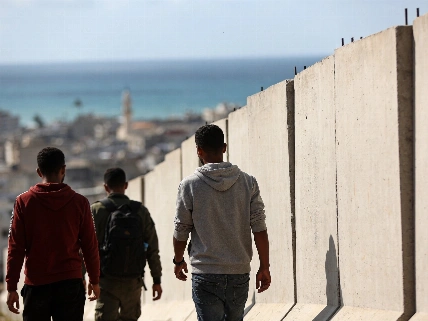
The episode came as police presence around Melilla's border perimeter was being reinforced. The measure followed calls on social media for a new mass entry. The drone incident and the border surveillance operation were separate parts of the security deployment.
Melilla's local government was not informed about the incident, according to Miguel Marín, the city's vice-president and councillor for Tourism. He criticised the lack of information and said he hoped such events would not affect the city's air links.
That concern has a practical basis. Low clouds regularly contribute to cancellations and delays at Melilla airport. The Ministry of Transport also identifies Moroccan airspace as one of the main difficulties in improving the aerodrome's operation.
The drone did not cause a cancellation or an airspace closure this time. It added another problem to a route already vulnerable to weather-related disruption. Spain's request is narrow: coordination with Morocco must keep surveillance activity away from the flight levels used by commercial aircraft. That is needed to protect Melilla's air links without stopping legitimate security work.