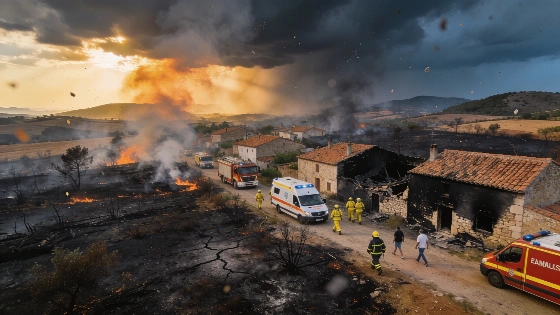
Over 1,000 people from six villages were forced out by a wildfire in Zaragoza. Authorities now allow phased returns as basic services are restored. The fire destroyed more than 14,000 hectares and left lasting damage.
After five days of forced evacuation, more than a thousand residents from five villages in Zaragoza and one in Navarra have started returning home as the wildfire that swept through Orés is finally under control. The authorities gave the green light on Monday, following confirmation that the fire, which devastated 14,400 hectares within an 80-kilometre perimeter, had been stabilized. The return is being managed in stages, prioritizing villages where water, electricity, and essential services have been restored.
Luesia, Uncastillo, and Malpica de Arba were the first to welcome back their inhabitants, while Asín and Orés had to wait until safety checks on fire-damaged roads were completed. Social workers and the Red Cross are coordinating the process, especially for elderly residents who were relocated from four care homes to Zaragoza. Their return depends on health assessments and the condition of their facilities, with some, like the Asín residence, suffering direct fire damage.
The emotional toll is evident among those returning. Many describe the anxiety of evacuation and the uncertainty of leaving their homes behind. Some, like María Luisa from Luesia, faced difficult decisions as alerts arrived and family members were still at work. Others, such as Antonio from Orés, admit reluctance to leave until authorities insisted. The support network includes psychologists and social workers, who are providing immediate assistance and assessing longer-term needs.
Local leaders are voicing concern about the future. Paco Auría, mayor of Orés, highlights the challenge for small, agricultural communities facing the loss of their natural environment and hunting grounds. He calls for expert input to help lawmakers develop measures to prevent similar disasters, noting that a single spark from a harvester can force the evacuation of entire villages. Teresa Ladrero, mayor of Ejea de los Caballeros, echoes the need for a new approach to land management to reduce wildfire risks.
For many, the practical challenges of returning are immediate. In Uncastillo, business owners worry about spoiled food stocks after days without power. Farmers, who played a crucial role in firefighting by creating firebreaks and defending urban areas with their tractors, are relieved but exhausted. The wildfire also sparked a wave of solidarity, with residents like Ana Cristina Diez offering shelter for displaced animals, and volunteers responding quickly to care for horses and dogs.
Restoring normality will take time. The psychological impact, especially on teenagers who feel a strong connection to the local landscape, is significant. Emergency psychologists report that young people have struggled most with the sight of their forests destroyed. The government of Aragón has restricted access to the affected areas to returning residents, emergency services, and essential utility workers, urging people to remain within their villages as safety operations continue.
This wildfire is part of a broader pattern of severe fires affecting Spain in recent years. In a related incident, another major blaze in Orés previously forced evacuations and destroyed thousands of hectares, highlighting the ongoing vulnerability of rural communities to extreme weather and agricultural accidents. As Aragón faces a new heatwave, authorities remain on alert for further risks.
Wildfires have become a recurring threat in Spain, particularly in regions with extensive agricultural activity and dry summer conditions. The combination of high temperatures, wind, and human activity increases the likelihood of such incidents. Local governments are under pressure to invest in prevention, improve emergency response, and support affected communities in recovery. The events in Orés underscore the need for coordinated action and long-term planning to protect both people and the environment.