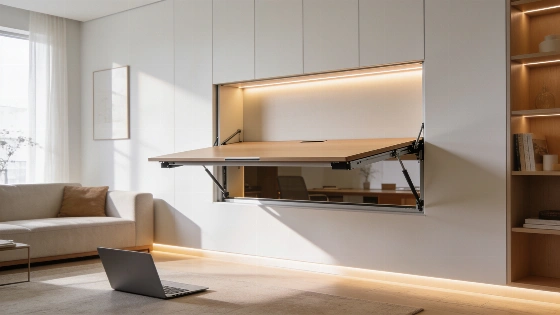
Foldable and floating desks are reshaping how people work from home in 2026. Their compact design, versatility, and ability to blend into any room make them a top choice for small apartments and multifunctional spaces. This shift reflects changing priorities in modern living.
In 2026, foldable and floating desks have become a defining feature of home interiors, especially in compact apartments and shared spaces. Their rise signals a clear departure from the era of bulky, permanent desks that once dominated home offices and study corners.
Unlike traditional desks, these new models can be folded away or mounted flush against the wall when not in use, instantly freeing up valuable floor space. This flexibility is particularly valuable in homes where every square meter matters, allowing residents to reclaim their living areas after the workday ends.
Adapting to Modern Needs
The surge in remote work has forced many to rethink how they organize their homes. As daily routines blend work, study, and leisure, furniture that adapts to changing needs has become essential. Foldable desks offer a practical solution for those living in small flats, studios, or multipurpose rooms, making it possible to set up a functional workspace without sacrificing comfort or aesthetics.
These desks are not just about saving space. Many designs now include built-in shelves, hidden compartments, laptop stands, and even integrated LED lighting. This allows users to keep essential items close at hand without cluttering the room with extra furniture.
Designs for Every Style
The popularity of foldable desks is also driven by their wide range of styles. Minimalist models suit modern interiors, while natural wood finishes appeal to fans of Scandinavian design. Industrial versions with metal frames and discreet wall-mounted options ensure there is a solution for every taste and décor.
Importantly, these desks can transform previously unused corners—such as a spare wall in the living room or a wide hallway—into efficient work zones, often without the need for major renovations or large investments.
Choosing the Right Desk
When selecting a foldable desk, careful measurement is key. The height and width must suit the intended user, especially if the desk will be used for several hours each day. Interior designers recommend pairing these desks with lightweight, easy-to-move chairs that match the scale of the room, helping to maintain a sense of openness.
Storage needs also play a role. Those who work from home full-time may benefit from desks with closed compartments for cables and accessories, while occasional users might prefer simpler models with just enough space for a laptop and lamp.
As foldable desks become a staple of home design in 2026, they reflect a broader shift in how people view their living spaces. The boundaries between work, rest, and leisure are less rigid, and furniture is expected to support multiple functions without creating clutter or discomfort.
According to Talent24h, this trend highlights the growing demand for adaptable, efficient solutions that make remote work more comfortable and visually harmonious, especially in urban environments where space is at a premium.