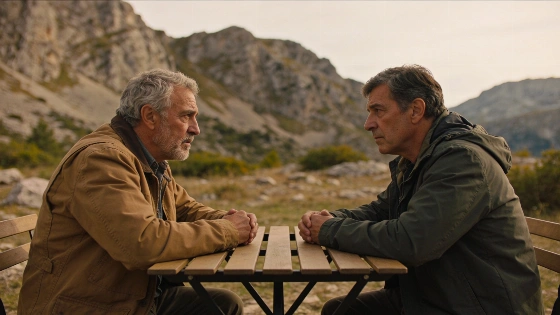
Josemi Latasa, once part of ETA, meets Fernando Garrido, whose family died in an attack. Their conversation reveals the personal toll of terrorism and the difficulty of leaving violent groups.
Josemi Latasa, who once belonged to ETA and took part in the attack that killed Fernando Garrido’s family, has confronted his past in a televised meeting. The Salvados broadcast brought Latasa and Garrido together, forcing both to revisit the trauma of a notorious bombing.
Latasa explained that after the attack, he stayed in ETA less out of belief and more because he felt trapped. Doubts set in, but pressure from the group and a sense that he was needed kept him from leaving. “At first I believed in it, then I just kept going because I was told I was needed,” he said. The bombing, which happened on October 25, 1986, in San Sebastián, targeted the car of military governor Rafael Garrido. The explosion killed Garrido's wife, son, and driver. Fernando Garrido lost both parents and his brother.
ETA is estimated to have left more than 850 dead, around 3,000 injured, and nearly 100 kidnappings during its decades of armed activity in Spain.
Latasa described the shock of realizing the bomb had killed not just the intended target but also his wife, child, and a cleaner. The emotional impact was immediate, but within ETA, the leadership focused only on the fact that the operation had disrupted a political demonstration in Bilbao. The deaths of bystanders were dismissed as “collateral damage.” There was little sign of regret or debate inside the group, where political goals came before human life.
After the bombing, Latasa said he lived in constant discomfort, surrounded by death and unable to break the cycle. “The wheel kept turning and it was hard to stop,” he said. Open discussion was discouraged, and he felt isolated. Eventually, Latasa left ETA, spoke out against its violence, and asked victims for forgiveness. According to laSexta, this move led to tension within ETA and played a part in the murder of another former member, Yoyes. After that, Latasa cut all ties with the group.
Years later, after serving time in prison, Latasa became one of the first former ETA members to publicly denounce the group and seek forgiveness. He wrote to Fernando Garrido, which led to the meeting shown on Salvados. Both men spoke about how the attack shaped their lives—Garrido had to rebuild after losing his family, while Latasa struggled with guilt and the consequences of his actions.
Latasa explained that he joined ETA after the age of 30, linking his radicalization to the political upheaval of the 1970s, including the events of March 3, 1976, in Vitoria. This personal background adds important context to his motivations and the broader climate that fueled ETA's recruitment.
The Salvados episode offers a direct look at the human cost of terrorism in Spain. It shows not only the pain of victims but also the pressures that keep people inside violent groups. The program’s approach is similar to other Spanish cases where victims and perpetrators have met face to face, such as those reported earlier during national remembrance events.
The episode paints a picture of a society still dealing with the scars of political violence. Latasa and Garrido’s willingness to talk signals a move from silence to accountability, but it also shows how slow change can be. The lack of empathy from ETA’s leadership and the difficulty former members face in leaving underline the ongoing challenges Spain faces in coming to terms with its recent past. Salvados does not offer easy answers, but it does force viewers to confront the realities of trauma, complicity, and the slow process of reconciliation.