George Lucas's museum opens in Los Angeles on September 22, 2026, with more than 1,300 works. Star Wars and Indiana Jones share the space with classic art, contemporary pieces and immersive replicas.
George Lucas's long-awaited museum opens to the public in Los Angeles on Tuesday, September 22, 2026. It brings paintings, comics, illustration and cinema into one story about visual art. The project covers 27,870 square metres across five floors in Exposition Park, or about 13 acres, and has an estimated budget of 1 billion dollars.
The idea is simple. Stories can be told through several kinds of visual art at once. ABC News describes the museum in similar terms. Cave paintings, sculpture, comics, photography, films and murals all feed into one history of visual storytelling.
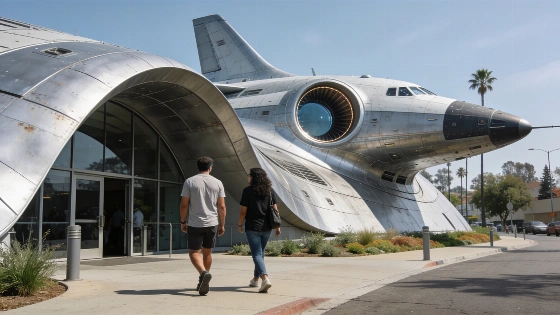
The building makes that idea visible. Its futuristic, spacecraft-like shape rises above a landscaped public space. A large oculus opens the complex to the sky.
The museum was conceived nearly 17 years before its public opening. George Lucas described it as a “temple to the people’s art”, while NBC News reported that the project had almost broken his will.
More than 1,300 works fill over thirty galleries. The collection includes Artemisia Gentileschi, Vincent van Gogh, Beatrix Potter, George Bellows and Norman Rockwell. It also features Frida Kahlo, Diego Rivera, Robert Colescott, Frank Frazetta, Ernie Barnes and Robert Crumb.
LAmag reports that the finished building has 35 galleries, two theatres and spaces for events.
The museum does not move through art history in a straight line. Its galleries follow five themes: comics, childhood stories, fantasy, history and community. Paintings appear beside Walt Disney panels, manga, Pikachu drawings, Robert Capa photography and the image known as La niña afgana. One of the most striking works is a powerful portrait of Barack Obama seen from behind.
That mix gives the museum its identity. It places the visual language of popular culture in the same conversation as painting, photography and historical art. The Associated Press reports that works by Banksy, Frida Kahlo and Norman Rockwell sit beside objects tied to comics and pop culture. The line between fine art and popular imagery is meant to stay open.
The museum has also announced access measures aimed at a broad public. Daily News reports admission of $25 for adults and $21 for seniors, with free entry for children under 17 and active-duty military personnel; some South Los Angeles communities are also eligible for free visits.
Technology takes the collection beyond objects that could be brought to Los Angeles. Immersive installations recreate the ceiling of the Sistine Chapel. They also recreate the Toros Alados con Cabeza Humana from the Palace of Sargon II at the Louvre and ancient cave paintings linked to the Museo Nacional y Centro de Investigación de Altamira in Spain.
Lucas's film archive will draw many cinema fans. It was established in 1983 at Skywalker Ranch in Marin County, California, and covers more than four decades of work tied to George Lucas's creative vision.
Visitors will see major objects from Star Wars and Indiana Jones. They include Darth Vader's costume, the R2-D2 robot and C-3PO's costume.
The complex is also a public venue, not only an exhibition space. Two cinemas can hold almost 300 people and will show films continuously. A library offers publications for all ages to read inside the museum. The books cannot be borrowed.
LAmag also lists a café, restaurant, shop and dedicated event spaces among the campus facilities.
The fifth floor is devoted to murals. It includes a gallery of previously unseen works by Banksy. Street art and political activism sit beside the museum's historical and cinematic holdings, within the same focus on visual storytelling.
The public opening follows a private gala held on September 19, 2026. Mark Hamill, Samuel L. Jackson, Francis Ford Coppola and Spike Lee attended, according to NBC News, ABC7 and The New York Times. The guest list placed the museum between a major cultural institution and a project tied closely to Hollywood's creative community.
The museum is large. It has five thematic routes and combines original objects with digital recreations. This is more than a private display of film memorabilia.
It argues that narrative art can bring old masters, comics, photography, cinema and street art into the same field. Star Wars is part of that story. The larger aim is to give popular imagery the same architectural and curatorial weight as the traditional canon.