Haakon VIII has officially become king of Norway after a parliamentary ceremony in Oslo. The event was marked by the absence of Queen Mette-Marit due to health issues. Public support for the monarchy has risen.
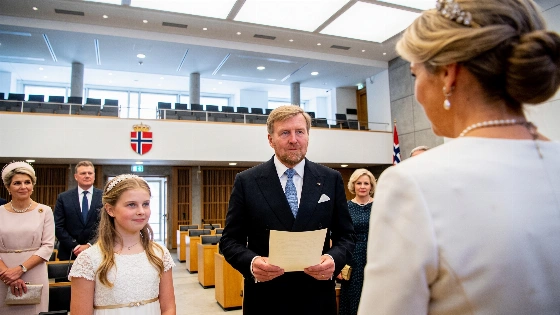
Norway’s political landscape shifted on Tuesday as Haakon VIII took the oath as the country’s new king in a formal session at the Oslo Parliament. The ceremony, rooted in the Norwegian Constitution, underscored the monarch’s commitment to governing within the framework of national law. Haakon VIII’s accession comes at a time of heightened public interest, with recent polls showing a notable increase in support for the monarchy.
The event was marked by the absence of Queen Mette-Marit, who continues to recover from a lung transplant performed in June. Her health complications prevented her from attending the ceremony, a detail that did not go unnoticed. Instead, the king’s daughter, Princess Ingrid Alexandra, 22, stood by her father’s side, symbolizing the continuity of the royal line. She has now become the official heir and, although not present in Parliament, fulfilled her own oath in writing at the Royal Palace. Prince Sverre Magnus and Queen Sonja, the king’s mother and widow of Harald V, were also present, reinforcing the family’s public role.
Haakon VIII arrived at Parliament in the same convertible used by his parents, Harald V and Sonja, at their 1968 wedding, adding a layer of tradition to the proceedings. In his address, the new king expressed hope that the strong relationship between the monarchy and Parliament, established by his predecessors, would continue to evolve in response to Norway’s future challenges. He also confirmed that both he and the queen remain committed to their duties, despite current health setbacks. Queen Sonja, now 89, retains her title and will continue to participate in royal activities as her health allows.
The president of Parliament, Masud Gharahkhani, responded by emphasizing the weight of the royal legacy and the expectations that come with it. The extraordinary session lasted just 30 minutes, but drew significant public attention. Crowds gathered along the route to Parliament and in designated areas with large screens to follow the ceremony live. This public engagement reflects a broader trend: according to the latest survey by NRK, 72% of Norwegians now support the monarchy, up from 64% in May. Only 20% favor a republic, while 8% remain undecided. The rise in support follows a period of controversy, including scrutiny over Queen Mette-Marit’s past association with Jeffrey Epstein and the legal troubles of her son, Marius Borg Høiby, who is appealing a conviction for sexual assault.
Princess Ingrid Alexandra, currently studying in Sydney, has begun an academic exchange at the University of Oslo to be closer to her family. With Queen Mette-Marit expected to reduce her official engagements, Ingrid Alexandra may take on a more visible role. The palace’s information service has confirmed the queen’s limited participation in public events for the foreseeable future.
As the nation transitions to a new monarch, the Royal Palace chapel will remain open daily for the public to pay respects to the late King Harald. The coffin will later be moved in procession to Oslo Cathedral, where a state funeral is scheduled for September 9. The burial will take place in the crypt beneath Akershus Fortress, a medieval site that once served as a royal residence. This period of mourning and ceremony highlights the enduring significance of the monarchy in Norwegian society.
For comparison, recent political events in other European countries have also drawn attention to the role of national institutions. For example, the Spanish political scene saw heightened tensions during the Ceuta crisis, as detailed in this report on political responses to border challenges. Such developments underscore the importance of stable leadership and public trust in times of transition.
Norway’s constitutional monarchy, established in 1814, is among the oldest in Europe. The king’s role is largely ceremonial, but the institution remains a symbol of national unity. The recent increase in public support may reflect a desire for continuity and stability amid broader social and political changes. The coming months will test how the royal family adapts to new responsibilities and public expectations, especially as younger members step into more prominent roles.