At just 20, Boris and Rosa began turning a neglected rural property into a fully off-grid home. Sixteen years later, they live there with their son, growing food, generating solar power, and sharing their experience in sustainable living. Their story highlights both the promise and the challenges of building outside the conventional system.
At the age when most of their peers were focused on city life, Boris and Rosa set out to reclaim a forgotten piece of land. Sixteen years ago, they began working on a 7,000-square-meter abandoned plot, determined to create a home that would rely on the land itself and minimize dependence on outside resources.
Their first shelter, known as the Casa de la Seta, was built almost entirely from materials found on site or salvaged from elsewhere. Earth from the property, straw, glass bottles, and even an old truck tarp for waterproofing formed the structure. Boris recalls that the initial build required virtually no money—just time, effort, and ingenuity.
From Ruin to Resilience
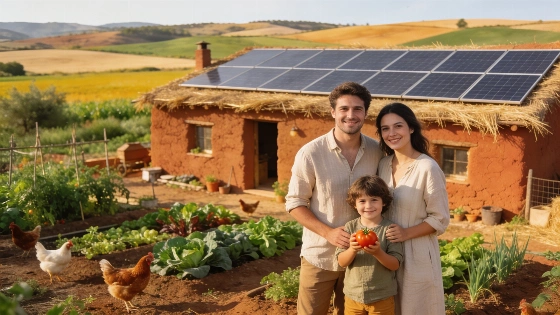
Over the years, the couple expanded their project. The main house now features thick earthen and thermo-clay walls, open living spaces, a green roof, and dedicated areas for growing food and keeping animals. Solar panels provide electricity, while water comes from an existing well. Elevated garden beds supply much of the family's produce, and chickens offer a steady source of eggs.
What began as a personal experiment has grown into Permacultura por la Tierra, an initiative that blends sustainable building, ecological farming, resource management, and environmental education. Boris and Rosa now live on the property with their son Riu, integrating permaculture principles into every aspect of daily life—from construction and food to health and their child's education.
Permaculture as a Way of Life
For the family, permaculture is more than just organic gardening. It shapes how they build, eat, use water and energy, and raise their child. Riu grows up immersed in the rhythms of nature, learning directly from the land. The family documents their progress on social media and hosts workshops on natural building and ecological agriculture, attracting interest from those seeking alternatives to conventional living.
Yet, as their story has gained attention, it also raises questions about the legal and technical realities of building on rural land in Spain. According to the Ley de Ordenación de la Edificación, any permanent residence must be designed by a qualified architect and meet strict standards for safety, fire protection, sanitation, insulation, accessibility, and energy efficiency. Alternative construction methods are allowed, but only if they can be proven to meet these requirements.
The Legal Landscape
Land classification is crucial. Spanish law requires administrative approval for any new building, and what is permitted on rural land depends on regional and municipal regulations, as well as the specific characteristics of the plot. Simply buying a rural property does not automatically grant the right to build a permanent home.
As noted by Talent24h, the available information does not specify the legal status of Boris and Rosa's property or the permits obtained. There is no evidence of irregularity, but their experience underscores the importance of technical oversight and legal compliance for anyone considering a similar path.
The story of Boris and Rosa offers a glimpse into what is possible with determination, creativity, and a commitment to sustainability. It also serves as a reminder that building outside the mainstream requires not only vision, but careful navigation of Spain's regulatory framework.