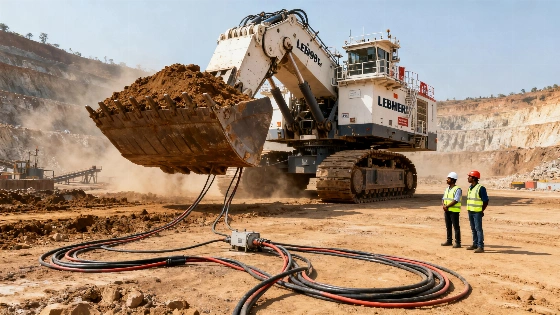
Giant Liebherr R 996 Excavator Converted from Diesel to Electric for the First Time. A unique upgrade was carried out in India: the 650-ton Liebherr R 996 excavator now runs entirely on electricity. The project was implemented by Lloyds Metals and Energy and could change the approach to heavy machinery in the mining industry.
The Liebherr R 996 excavator, which previously operated on diesel fuel, has now been fully converted to electric power. The 12-meter-tall, 650-ton machine is used by Lloyds Metals and Energy at one of its Indian facilities. As Electrek notes, this is the first time in India that such large-scale equipment has completely eliminated diesel.
The modernization project turned out to be more complex than a simple engine replacement. Lloyds Metals and Energy engineers completely redesigned the excavator's power architecture: they changed the power supply system, upgraded the control systems, and implemented new safety solutions. All work was carried out in-house by the company, without the involvement of Liebherr, the manufacturer.
In its diesel version, the Liebherr R 996 can move up to 70 tons of material per cycle with its 36-cubic-meter bucket. The machine's power reaches 3,000 horsepower. For the mining industry, where equipment operates under harsh conditions and almost without interruption, reliability and efficiency are critical.
The switch to electricity serves several purposes: reducing emissions, lowering operating costs, and decreasing dependence on diesel fuel. As fuel prices rise and environmental requirements tighten, such solutions are becoming increasingly relevant for large industrial enterprises.
A technological challenge
Converting the Liebherr R 996 into an electric machine required not only technical expertise, but also significant investment. All major components had to be adapted to new energy sources, stable performance under heavy loads had to be ensured, and personnel safety guaranteed.
According to Lloyds Metals and Energy CEO B. Prabhakaran, this project is not just a step towards electrifying a single machine, but an attempt to rethink the future of the entire mining industry. The company views the switch to electricity as part of a long-term development strategy.
Significance for the Industry
The modernization of the Liebherr R 996 coincided with a global trend: more and more manufacturers of heavy machinery are seeking ways to give up diesel in favor of electricity and automation. In India, this project became part of the Make in India government program, aimed at developing domestic industrial technologies and reducing dependence on imports.
Although detailed technical specifications of the electric version have not yet been disclosed, the very fact of successfully converting such a large machine could become a stimulus for other companies. In the future, this could help reduce environmental impact and increase the economic efficiency of mining enterprises.
The transition of heavy machinery to electricity is a complex and costly process, but the experience of Lloyds Metals and Energy shows that such projects are already being implemented in practice. If this trend continues, we can expect to see more examples of electrification in the mining and construction sectors in the coming years.